Travel
The Pig at Harlyn Bay
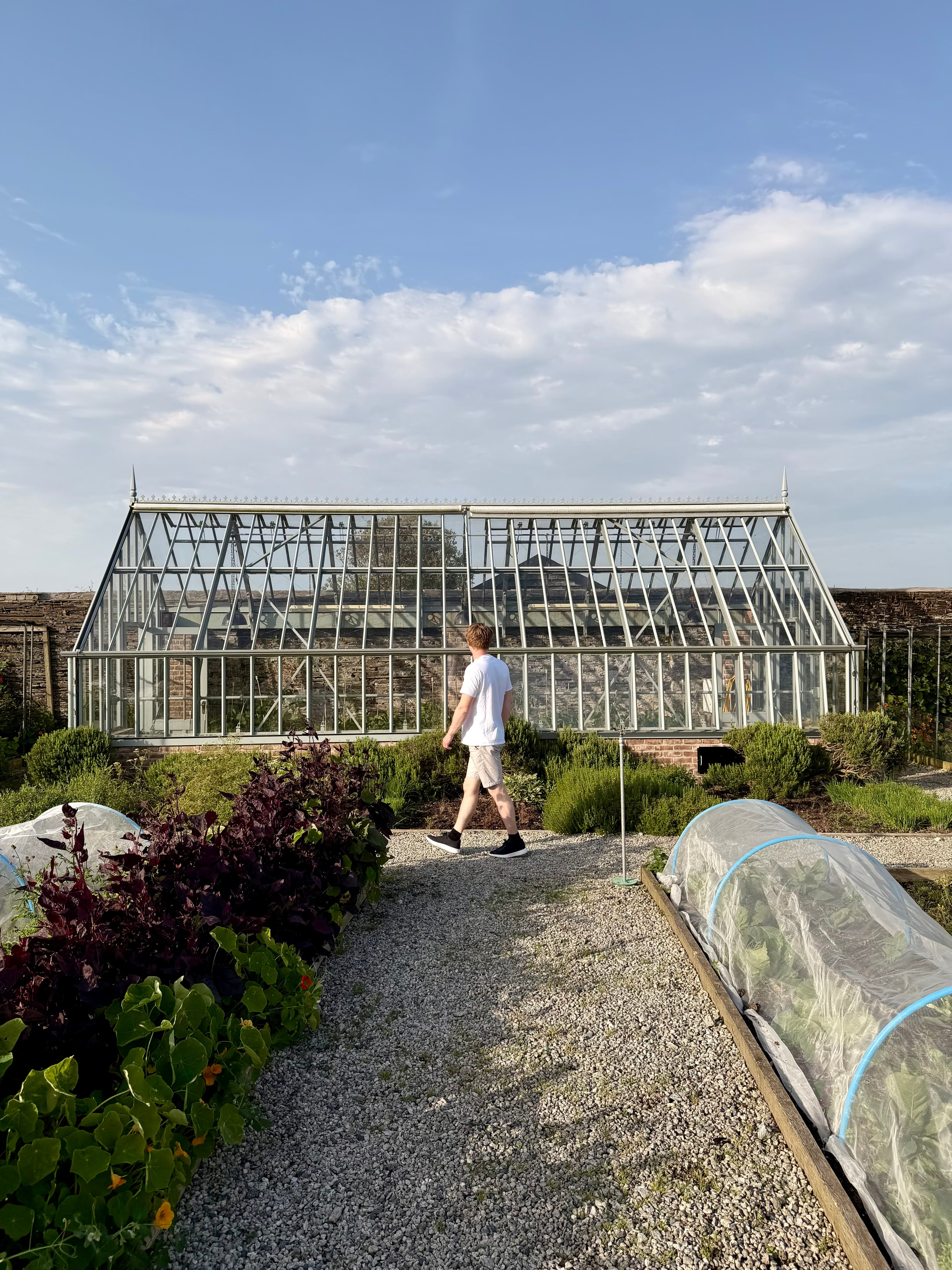
A Cornish farmhouse above the bay, dark-panelled rooms full of lamplight, and a walled kitchen garden in full June swing — the Pig does it again, this time with the sea at its back
Travel
The Pig's Southampton outpost — medieval walls, a deli counter, and the kitchen garden ethos distilled into a city house
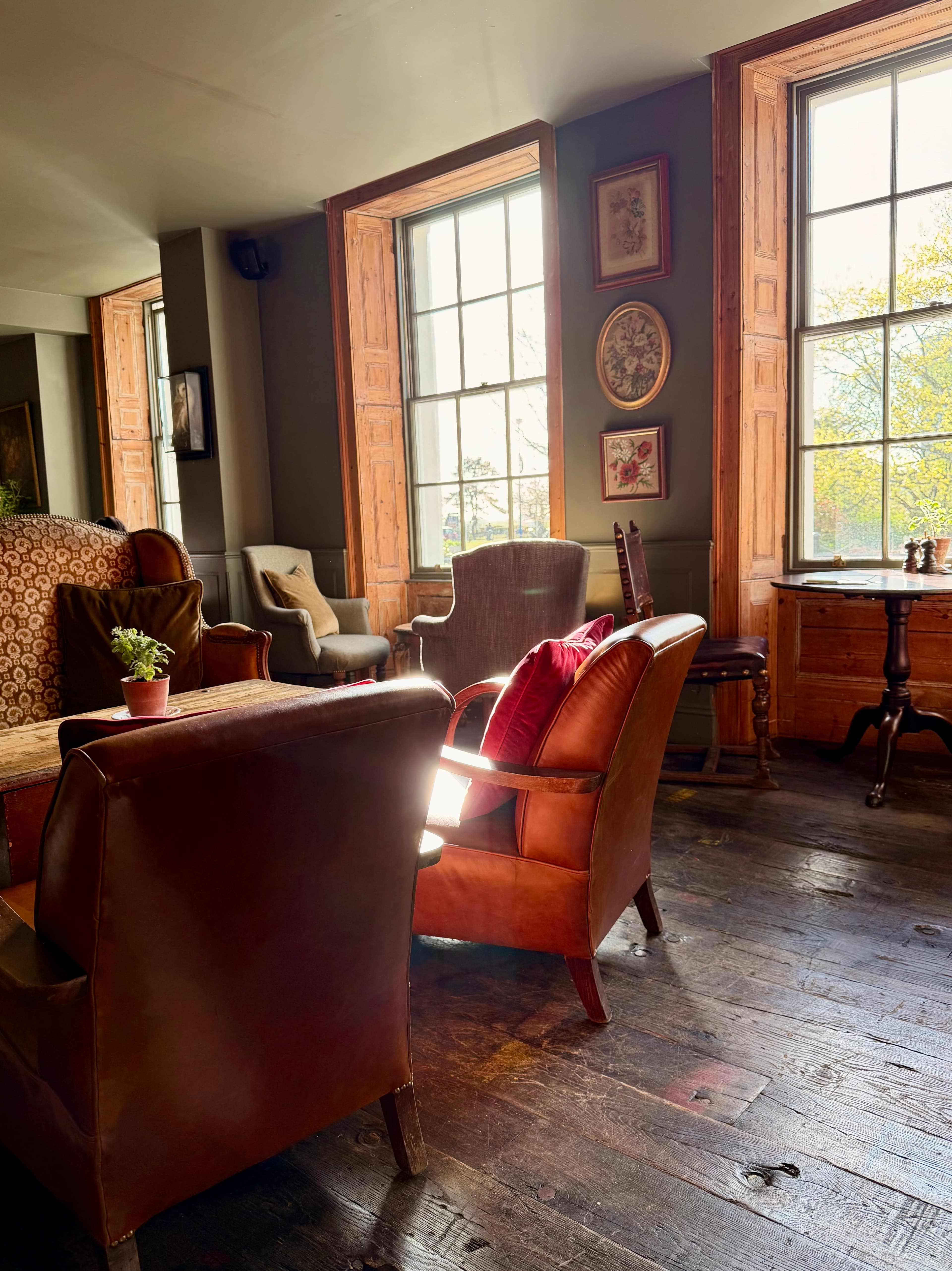
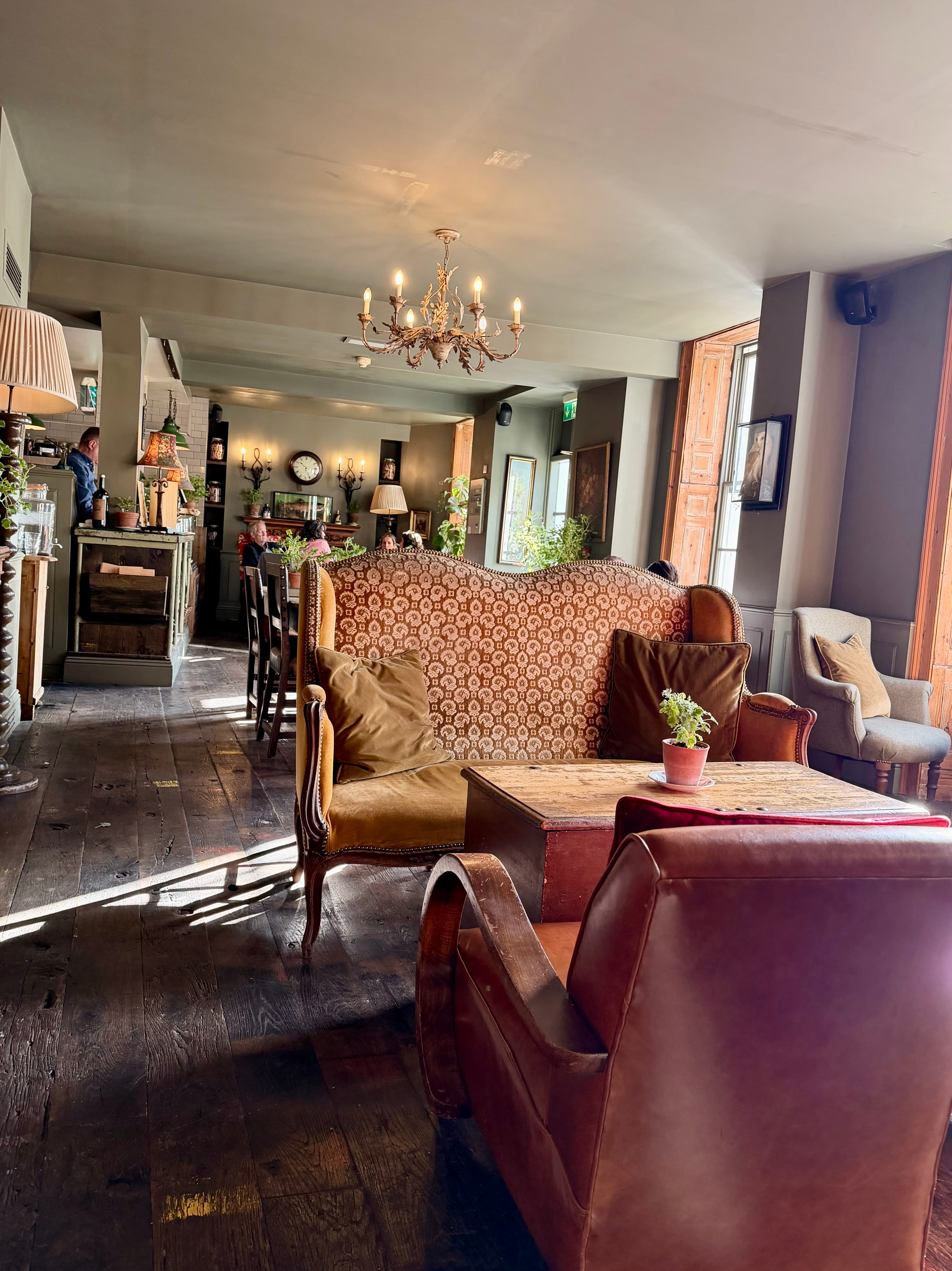
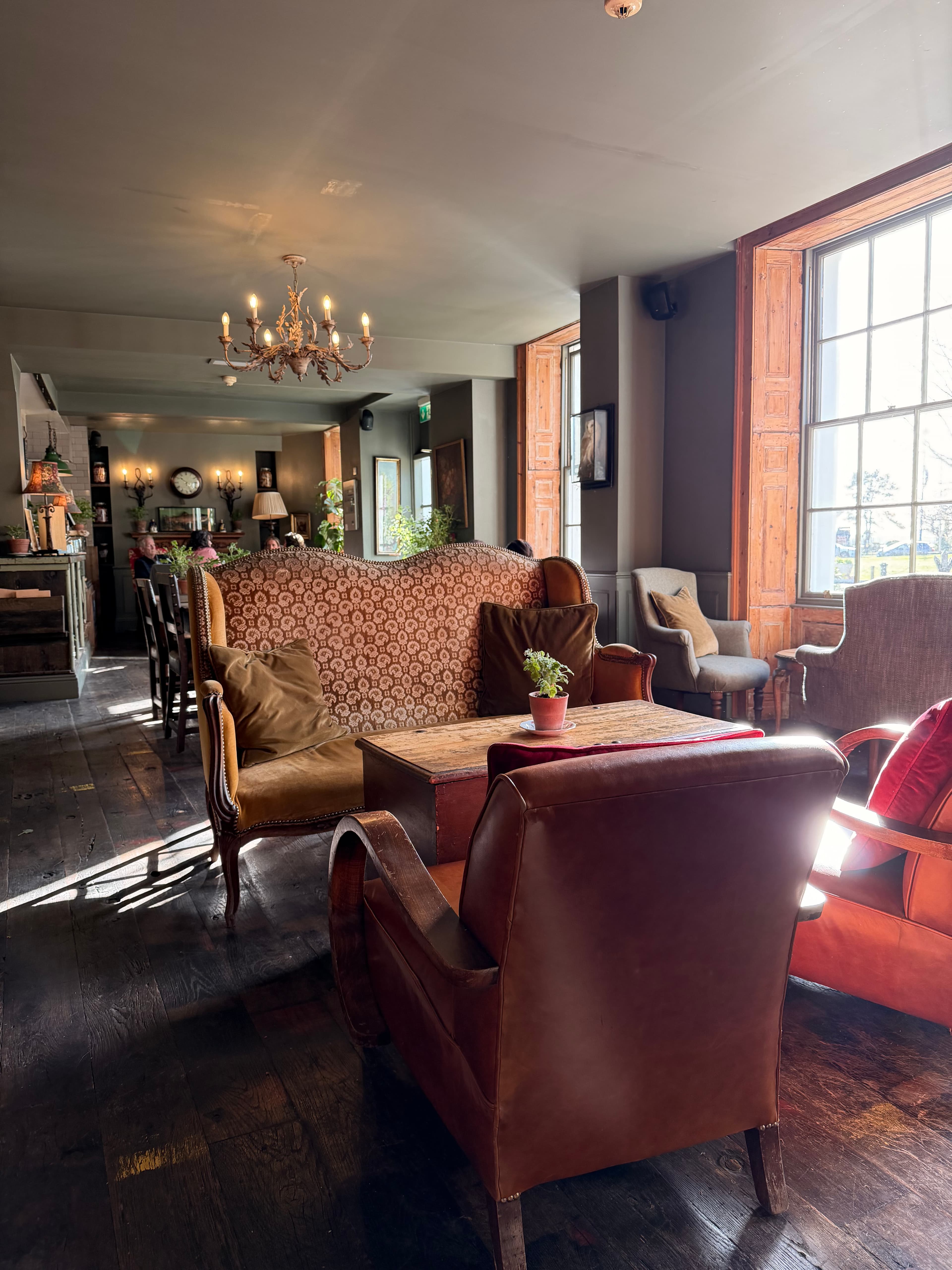
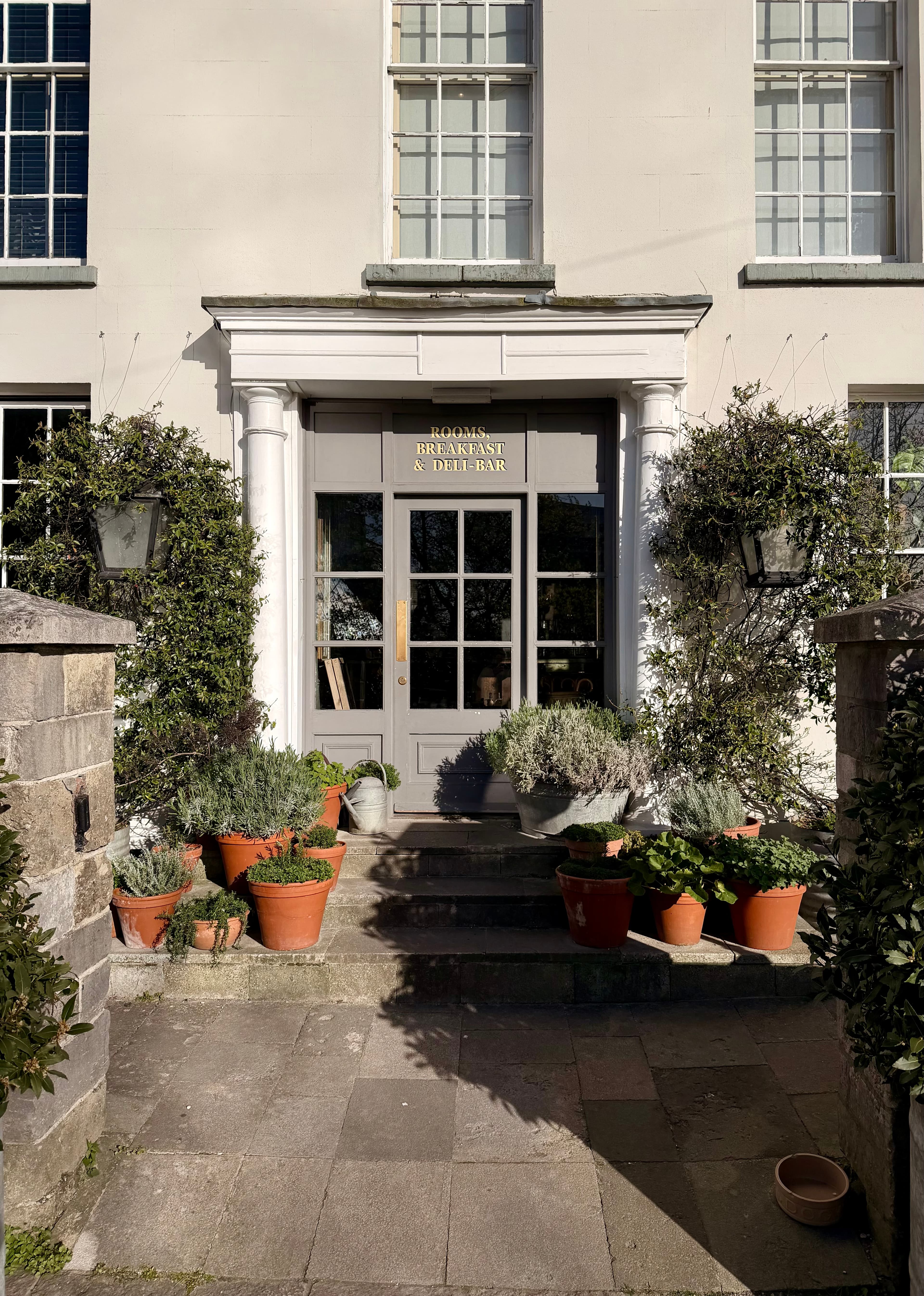
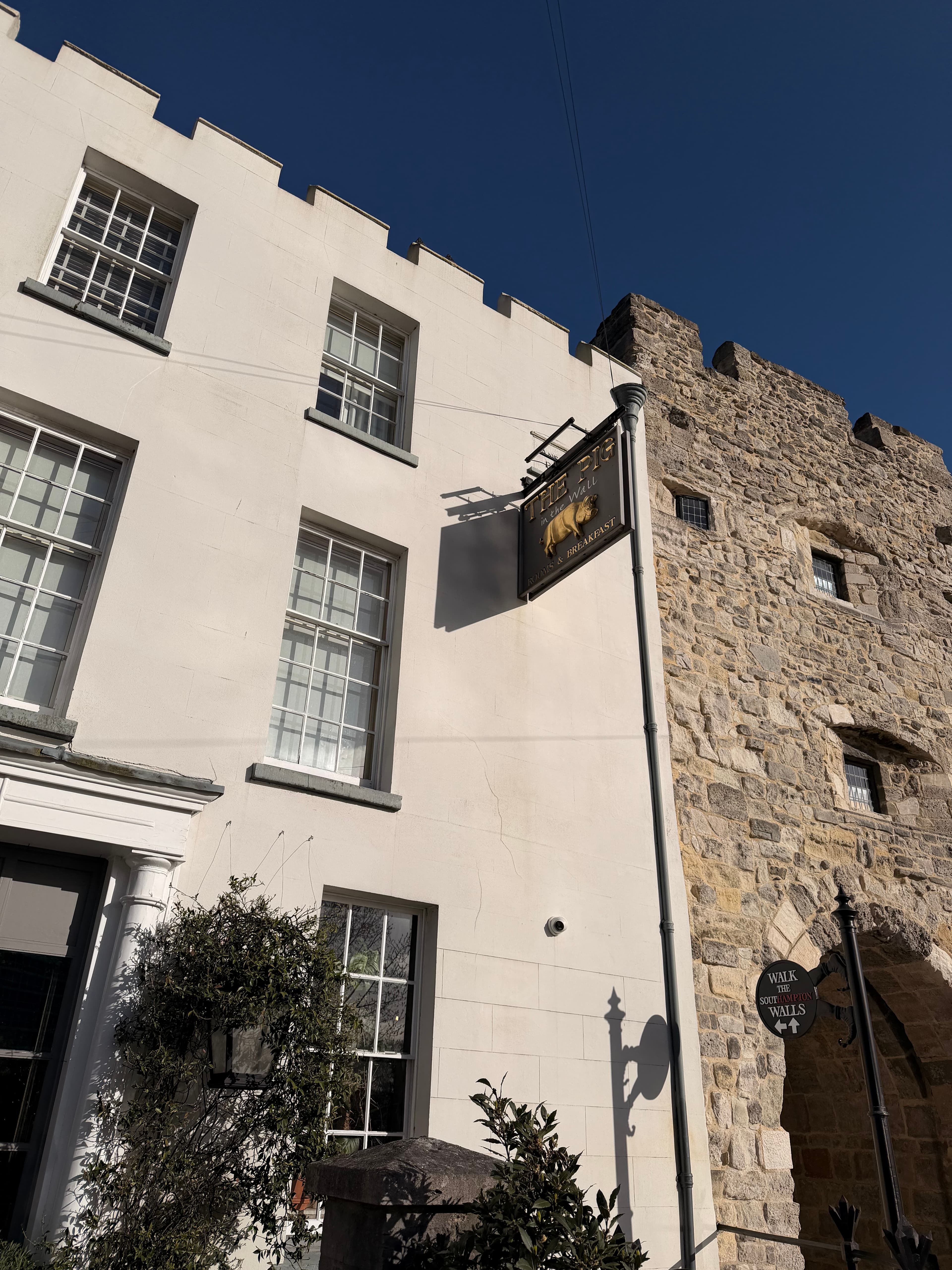
The Pig in the Wall is the Southampton outpost — a narrow Georgian townhouse pressed right up against the medieval city walls, which makes it unlike any of the others. No sprawling estate, no walled kitchen garden, no cedar trees on a lawn. Instead: terracotta pots of herbs crowding the entrance steps, a grey painted door lettered in gold, and inside, one of the most quietly beautiful rooms I've sat in.
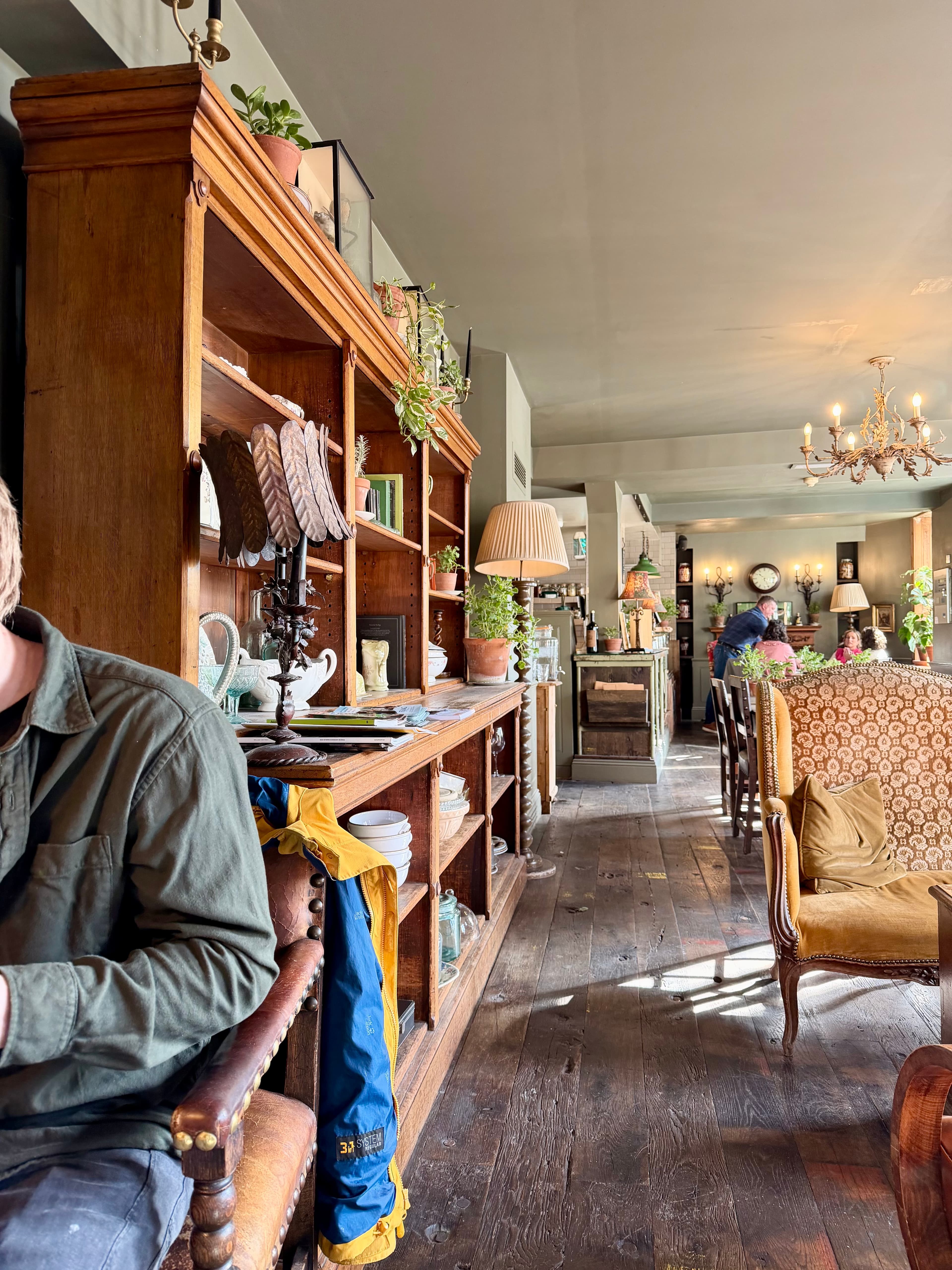
The sitting room runs the length of the first floor — dark wide floorboards, mismatched leather armchairs in amber and rust, a patterned sofa, a gilded chandelier. Tall sash windows in pine frames let the April light in at an angle across everything. Potted herbs on every low table. The bar tucked to one side, all green shelves and lamplight. You could spend a whole afternoon in it without noticing the hours pass.
Outside the door, the medieval wall stands close enough to touch — rough stone, centuries old, still doing what it was built to do. The Pig's sign hangs on a lamp post between the two buildings, Georgian and medieval side by side against a blue April sky.
The kitchen garden ethos shows up differently here: in the herb pots at the entrance, in the deli counter downstairs, in the sense that someone is paying attention to things growing. No glasshouse, no raised beds — but the care is the same.
Travel
A Cornish farmhouse above the bay, dark-panelled rooms full of lamplight, and a walled kitchen garden in full June swing — the Pig does it again, this time with the sea at its back
Travel
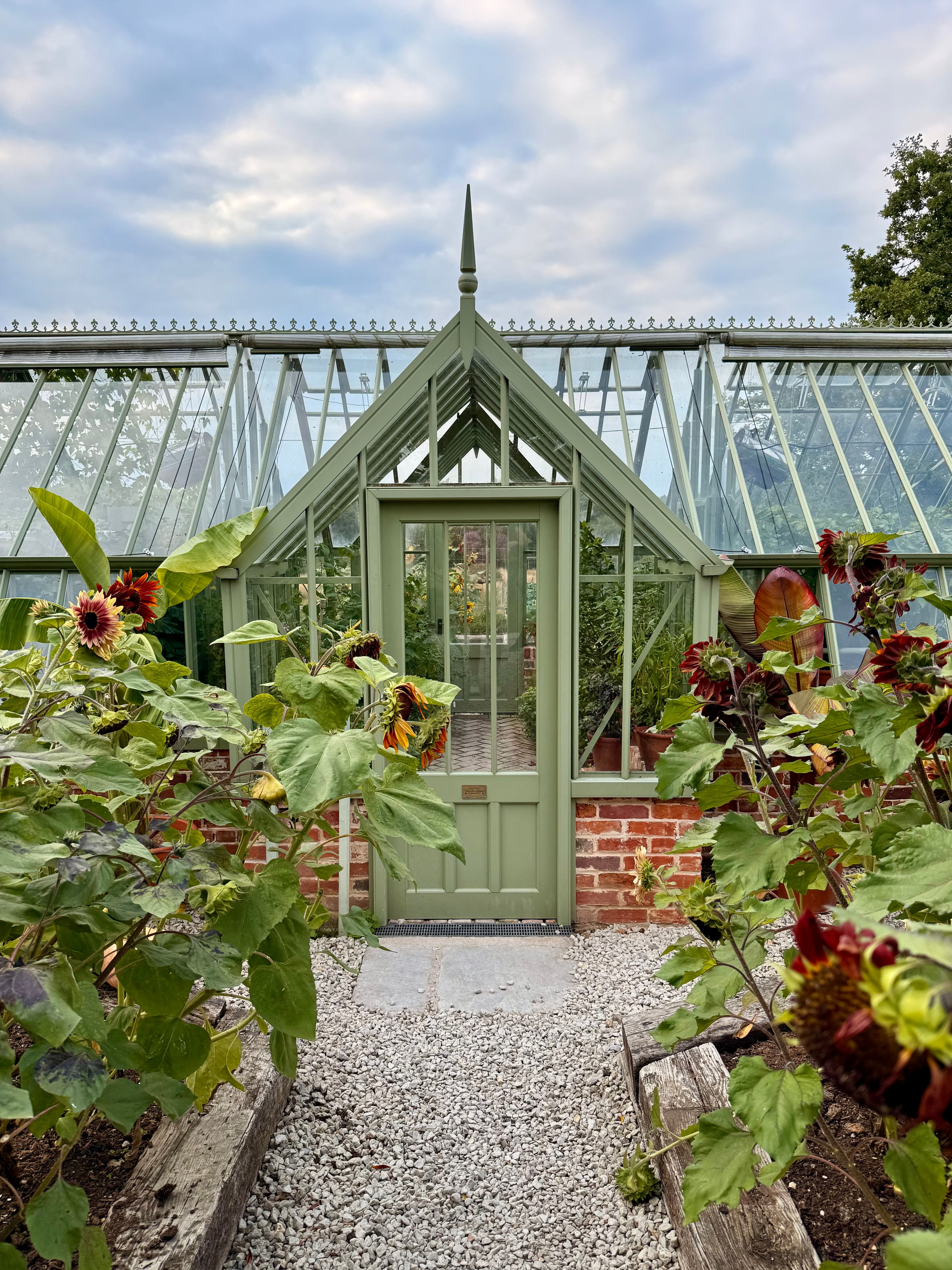
Sunflowers the colour of dried blood, a sage-green glasshouse, and the kind of kitchen garden that makes August feel like the best time to be anywhere
Travel
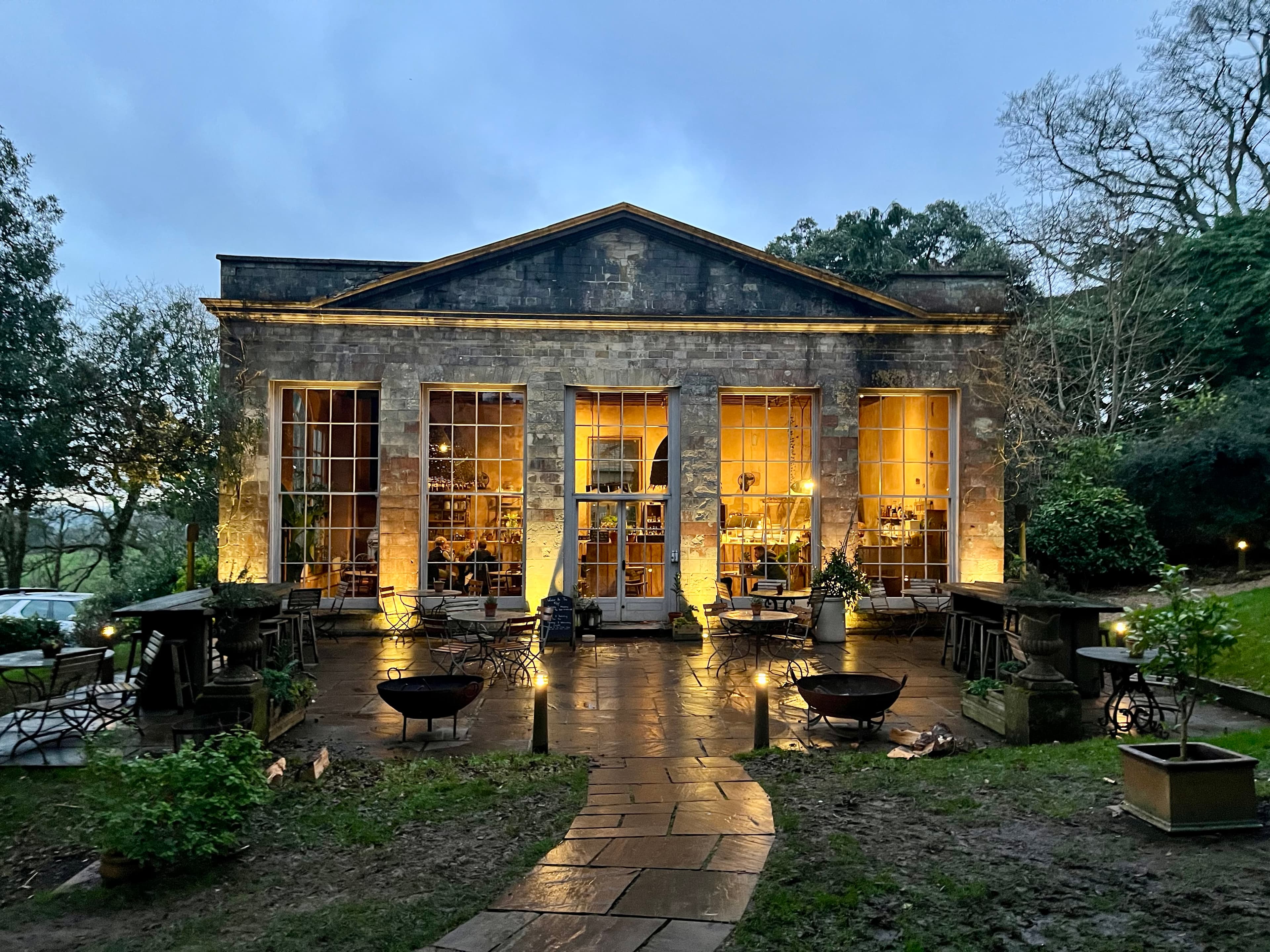
A Devon manor house, a glowing glasshouse, and shelves full of pickled things — the kitchen garden at Combe is the one that got me