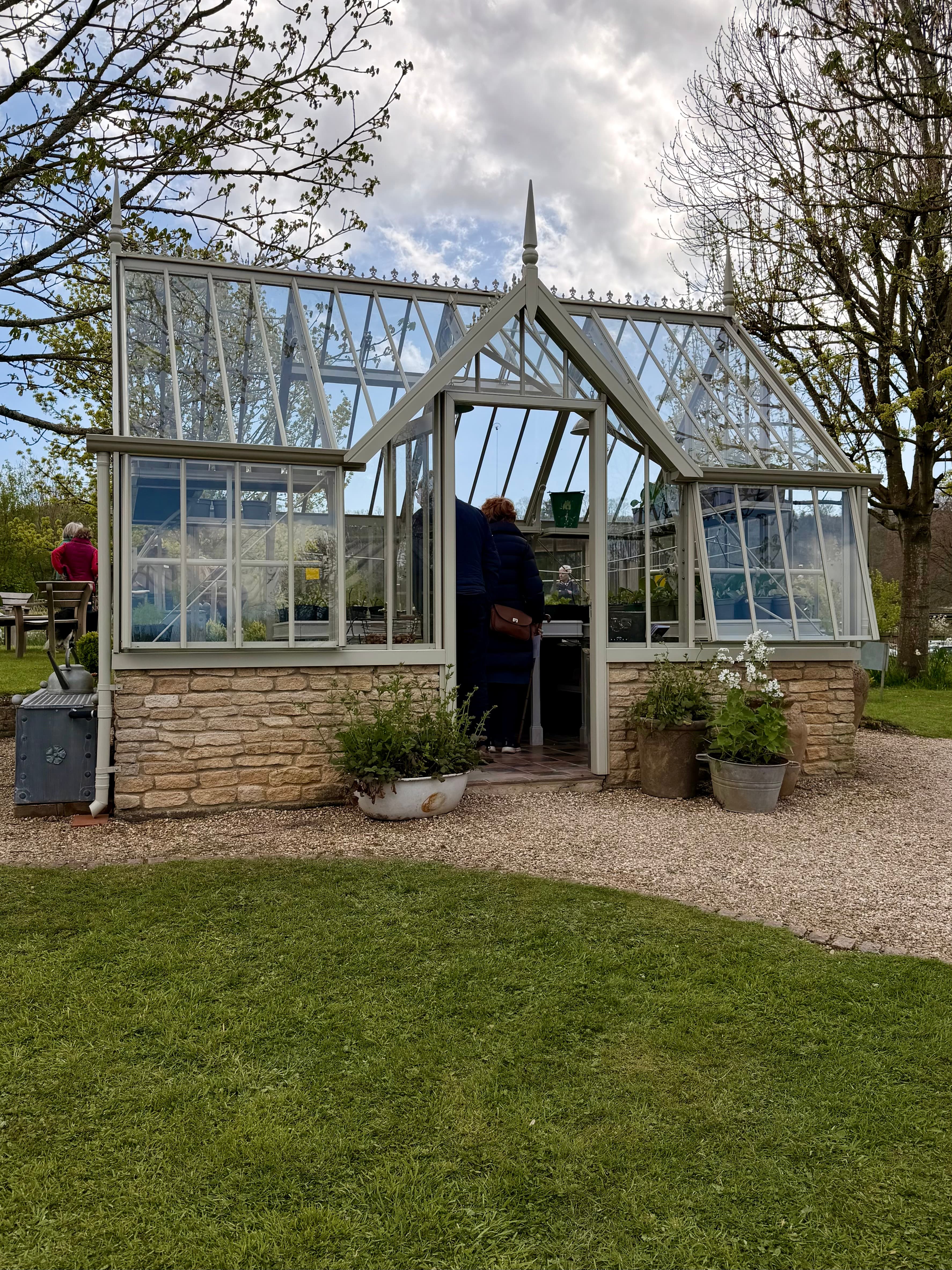
Garden
Alitex HQ and Factory
A visit to Alitex's Hampshire site — showroom glasshouses in a proper garden, a styled lean-to, and the factory where the aluminium frames are made
Garden
A July day at Wisley — the great Glasshouse from tropical canopy to alpine bench, the rock garden baking in the sun, the walled kitchen garden in full tumble, and the old vinery heavy with grapes.
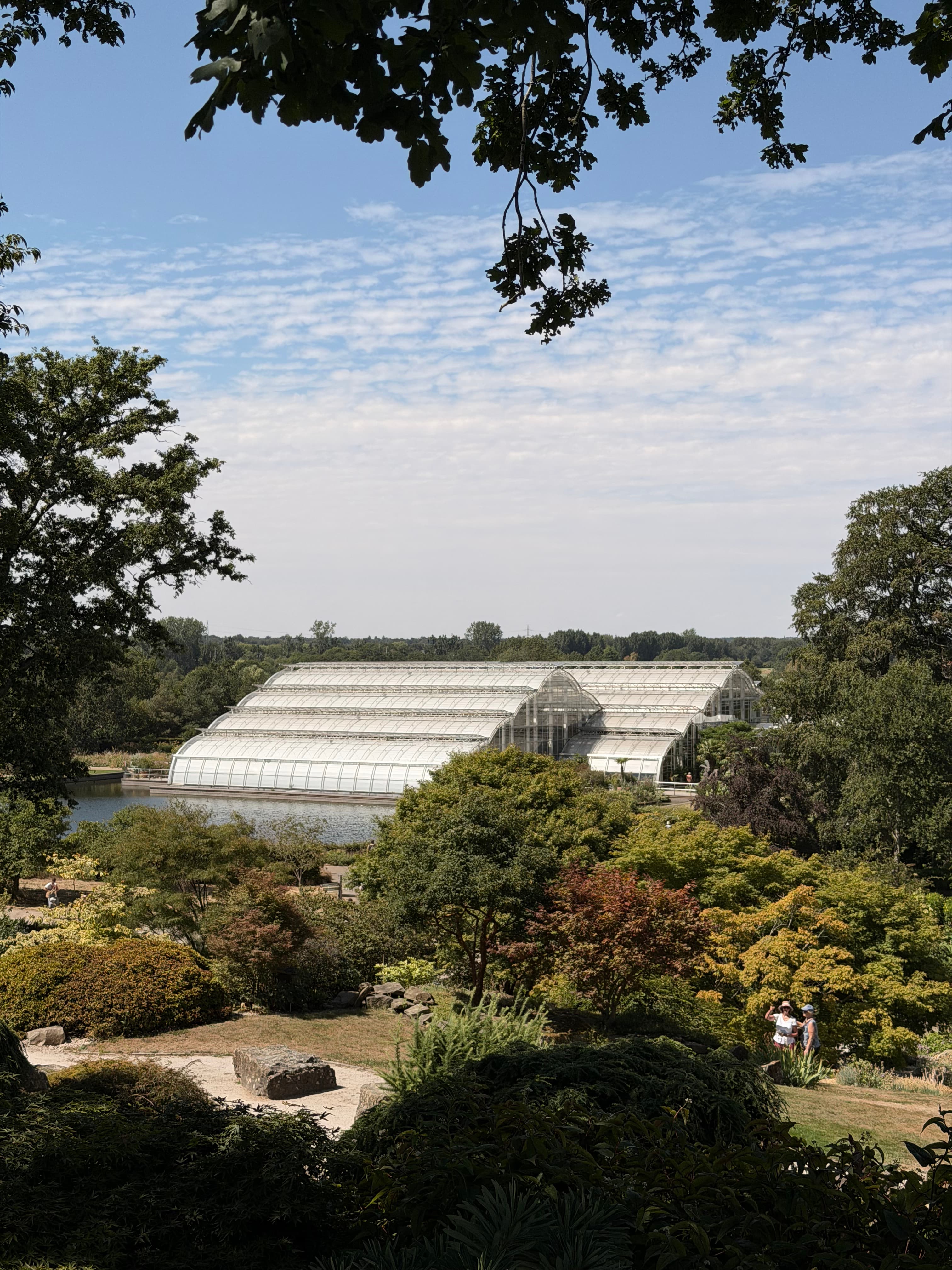
You see the Glasshouse before you reach it. From the top of the rock garden it sits low across the water — a long run of white glass folded into peaks, half-hidden behind Japanese maples and pines, the lake catching the light in front of it. It's the largest glasshouse the RHS has ever built, and from a distance it doesn't announce that at all; it just looks like it belongs to the landscape, the way the good ones always do.
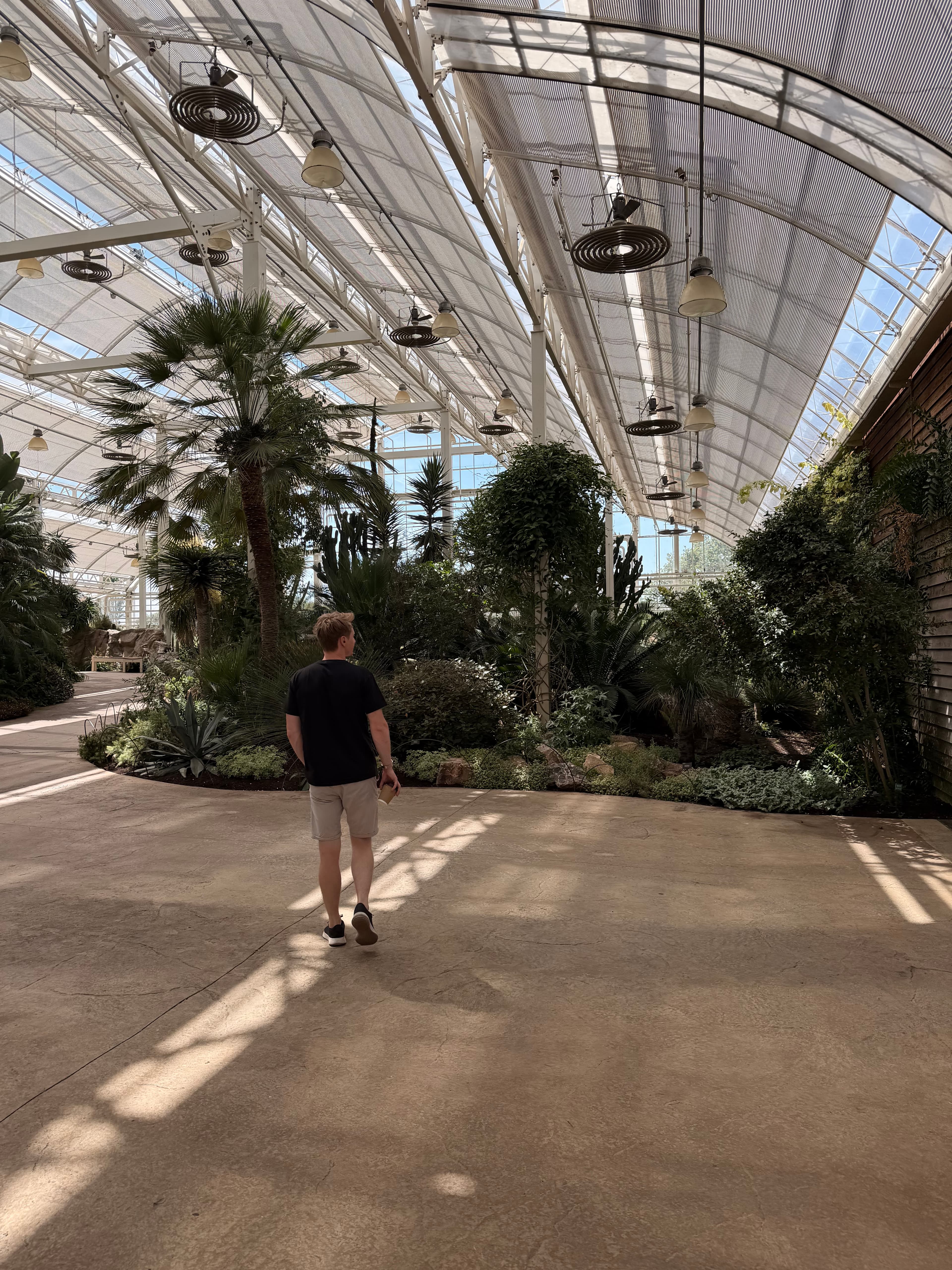
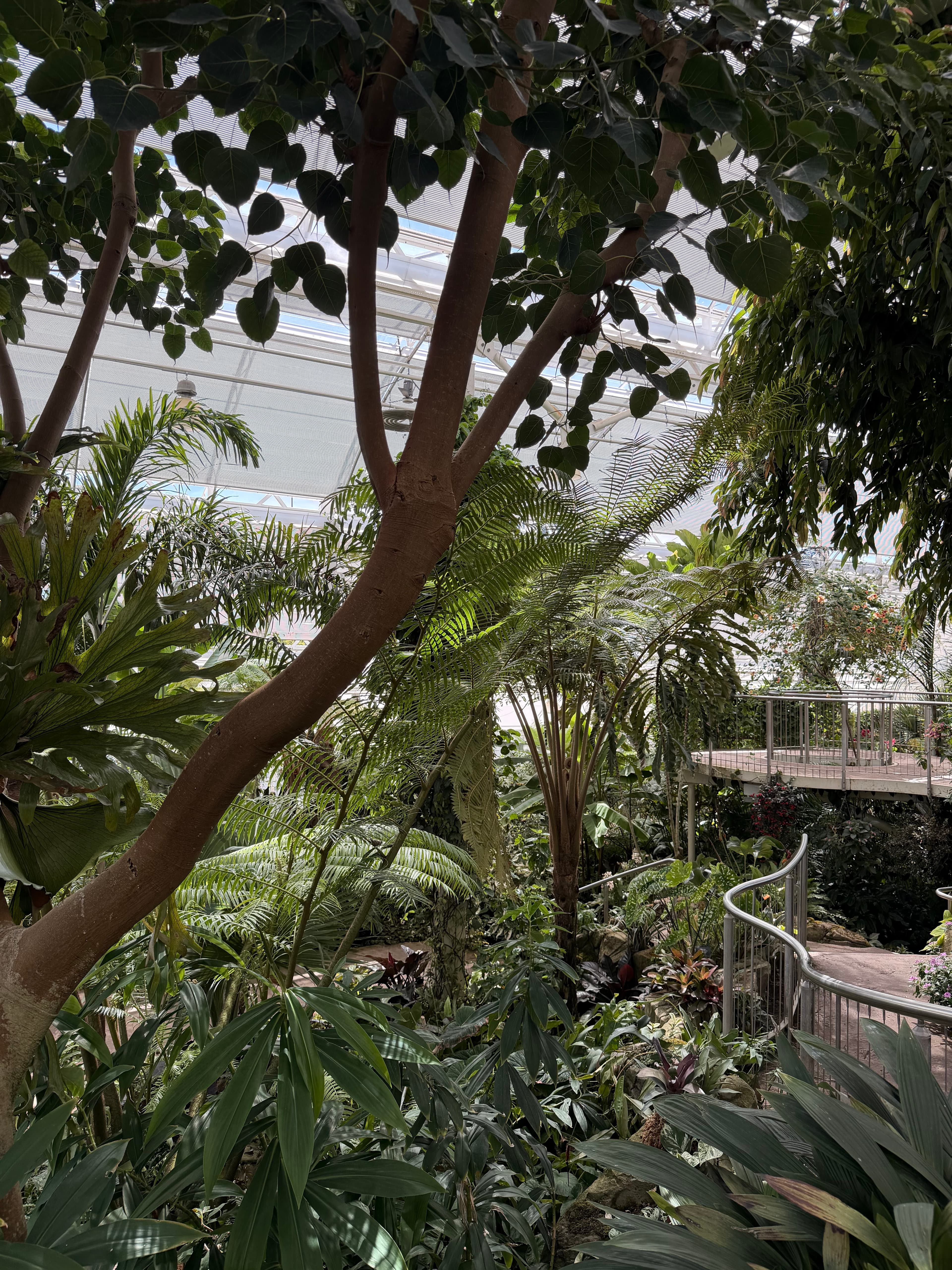
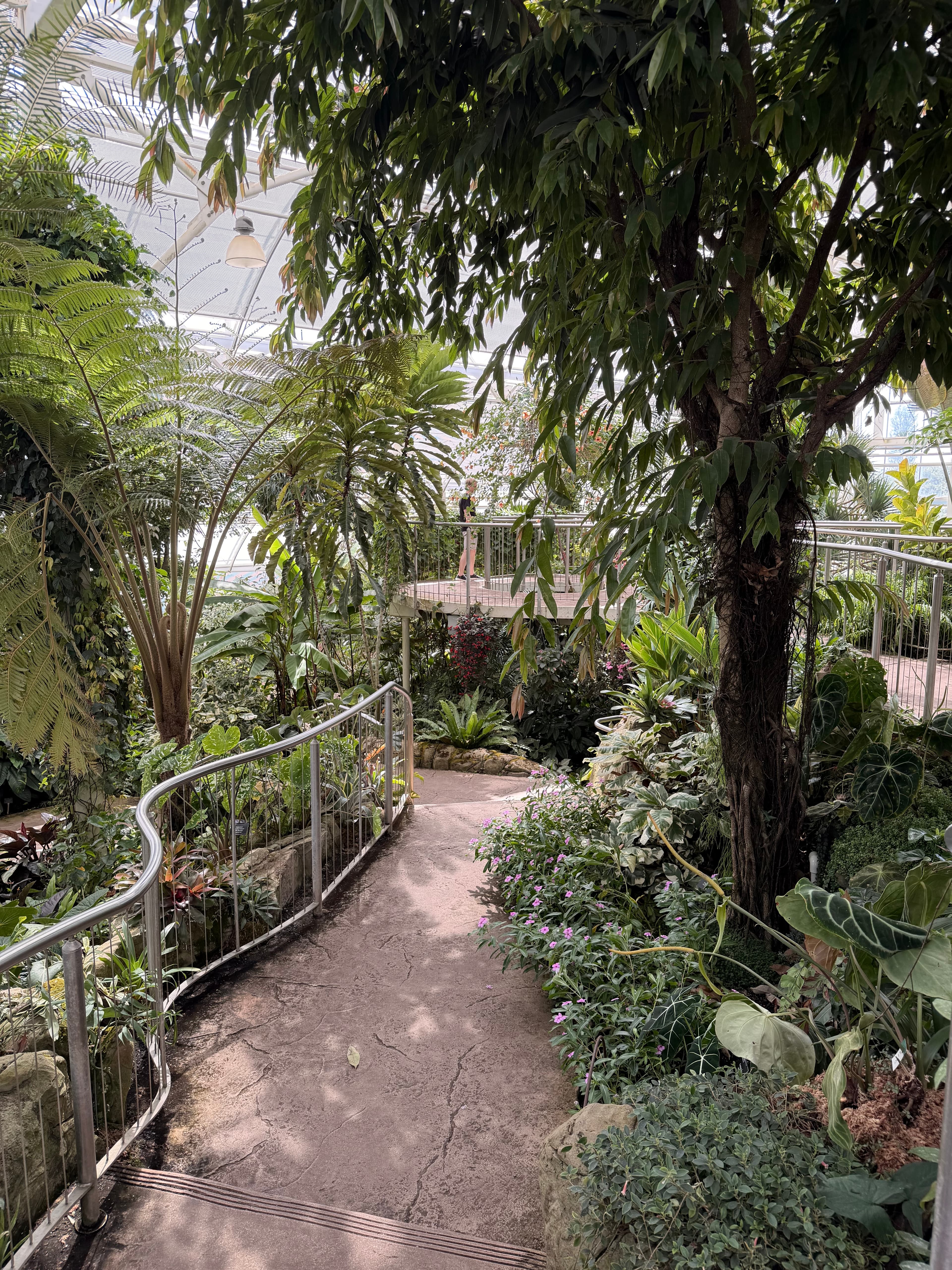
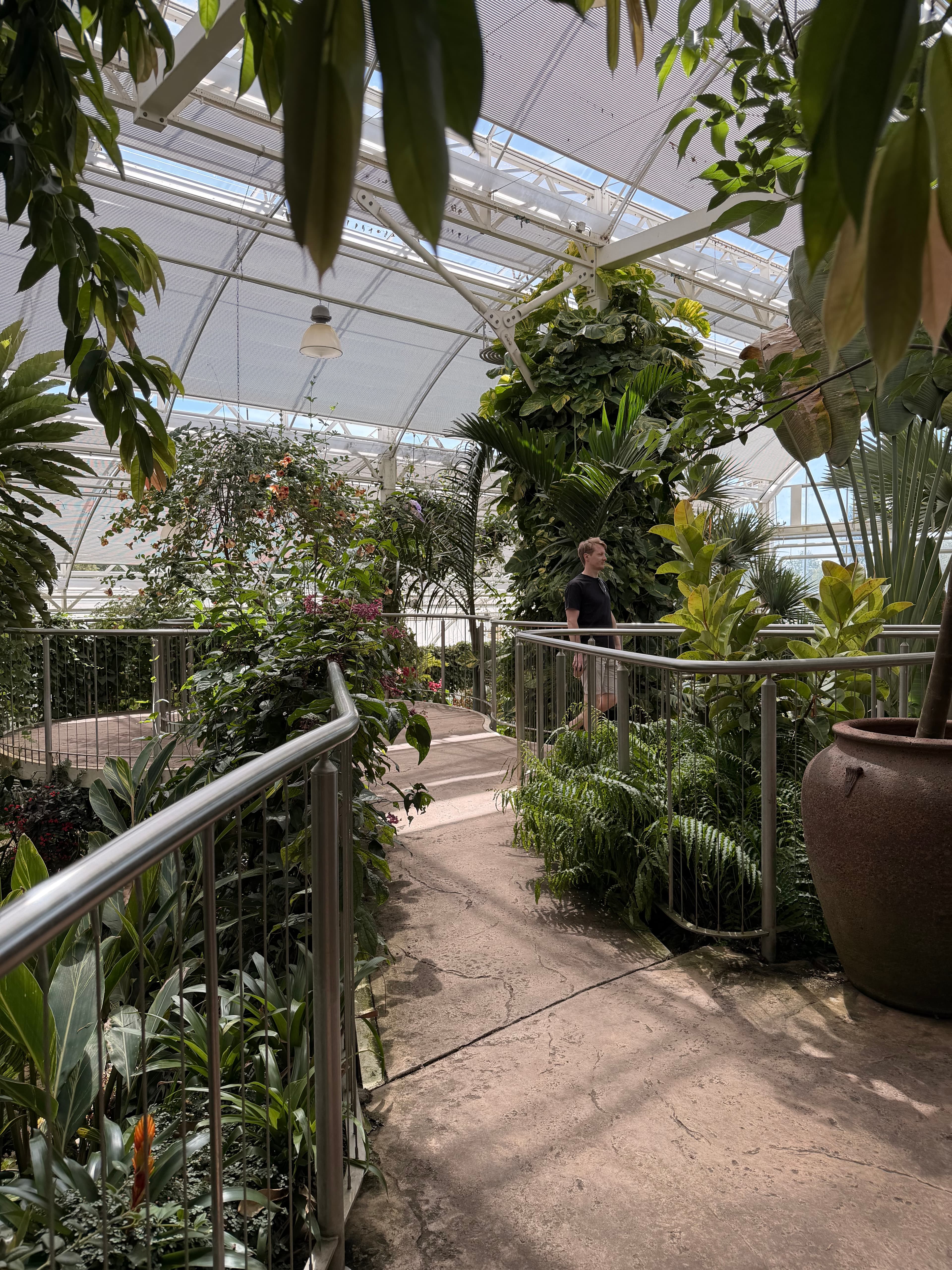
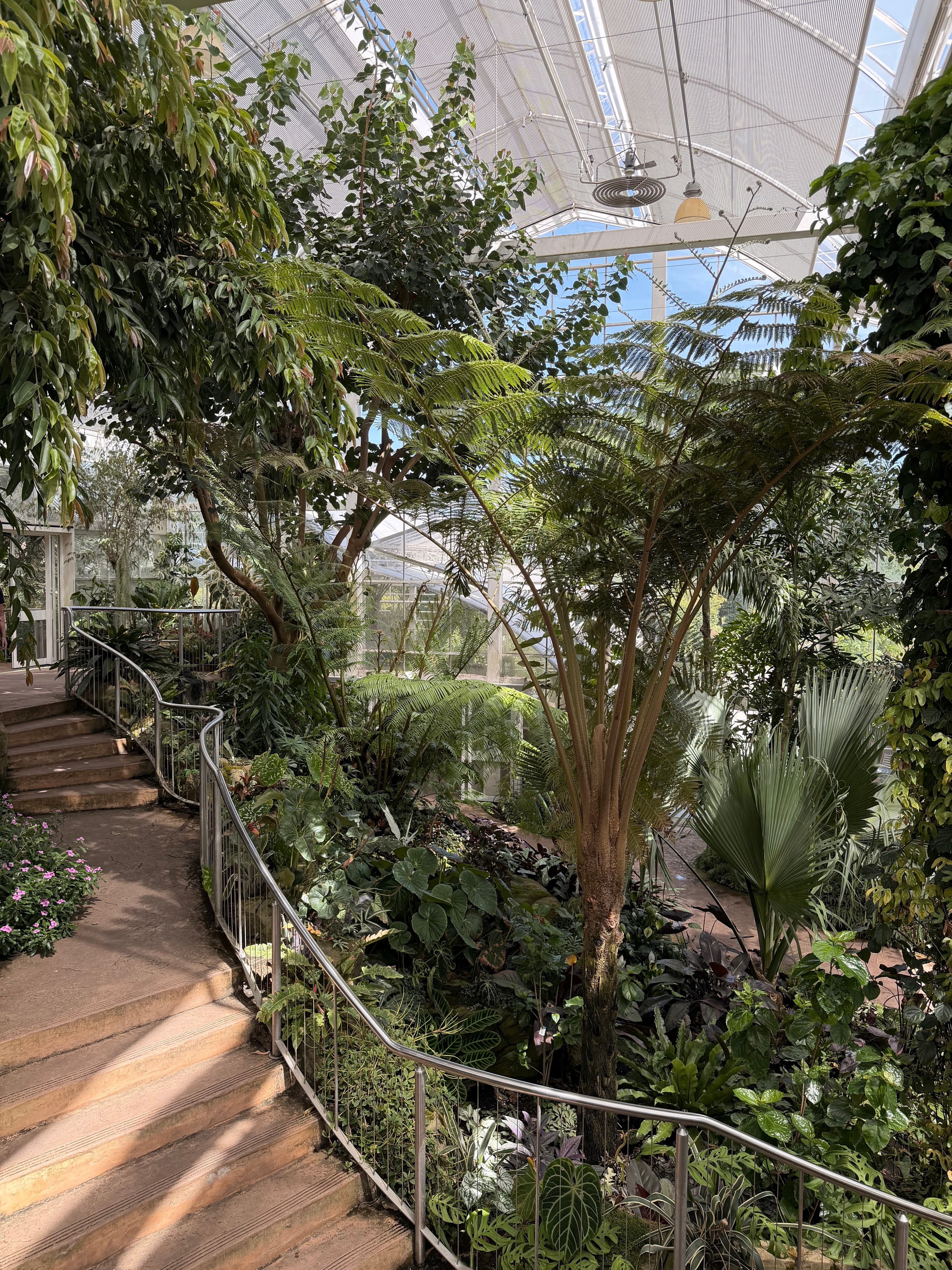
Inside, it's several climates under one roof. You walk in and the air changes — warm, wet, green. The tropical zone is the one that stops you: fan palms and banana plants throwing leaves the size of doors, a tree fern unrolling its crozier overhead, ficus branches crossing above the path like rafters. The ridge is a cage of white steel hung with spiral fans and pendant lamps, and light comes down through the shade cloth soft and even. A canopy walkway loops through the upper level so you can stand level with the treetops and look down into the planting.
The paths wind rather than run straight, curving between raised beds held back with slim steel railings, so the whole space unfolds a corner at a time. You lose sight of the far wall almost immediately. Palms in enormous terracotta pots, a corten trough the colour of rust holding a fan palm taller than the roofline behind it — everything scaled up until you feel appropriately small. We wandered it twice, once at ground level and once up on the bridge, and it read differently each time.
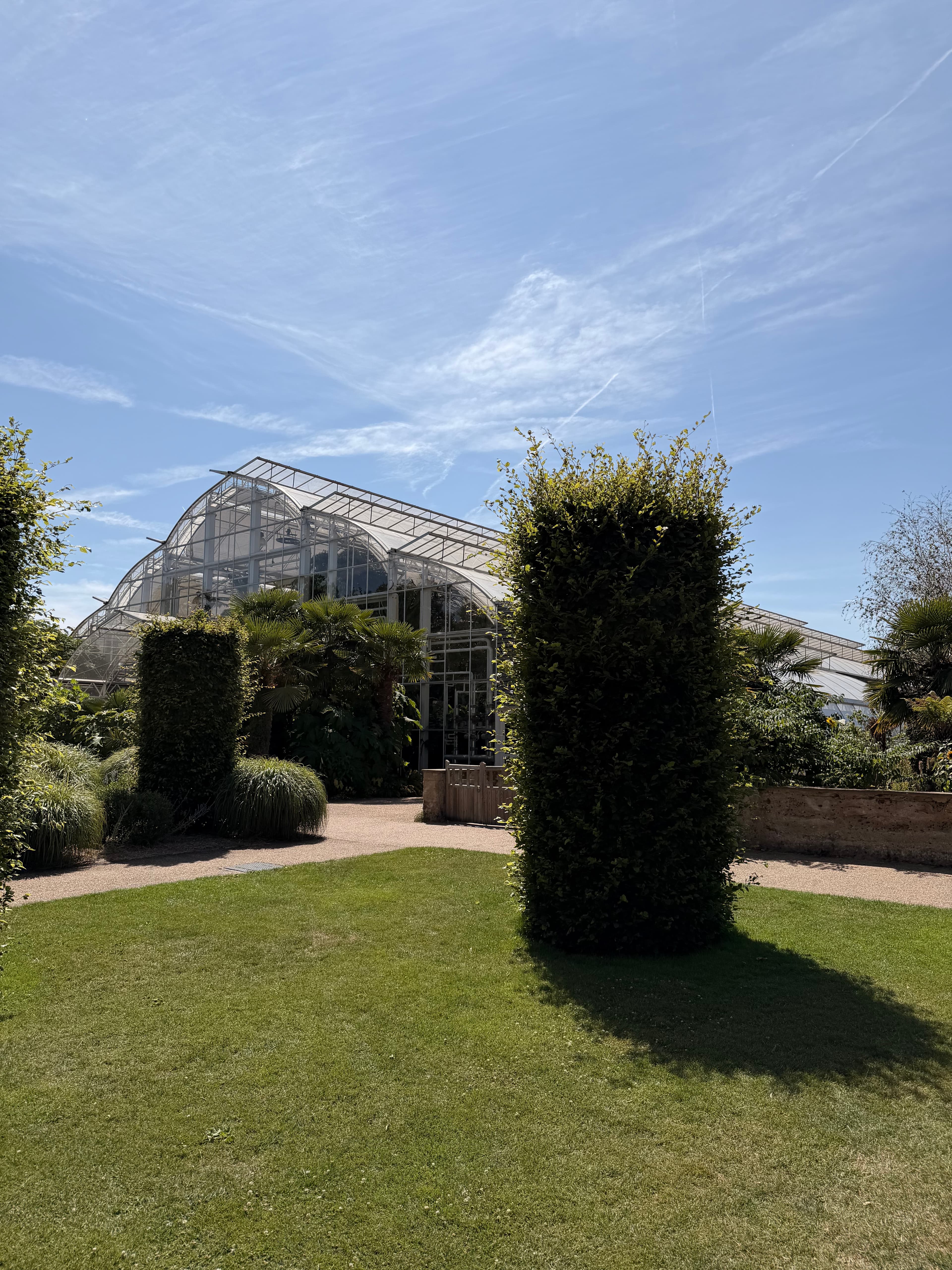
Then out into the heat. July was doing its proper work — blue sky, thin cloud pulled into streaks, the grass going gold at the edges. From the far side of the lake the whole glasshouse lays itself out, all those glazed peaks in a row, and framed through the oak leaves at the top of the rock garden it looks almost like a lakeside pavilion.
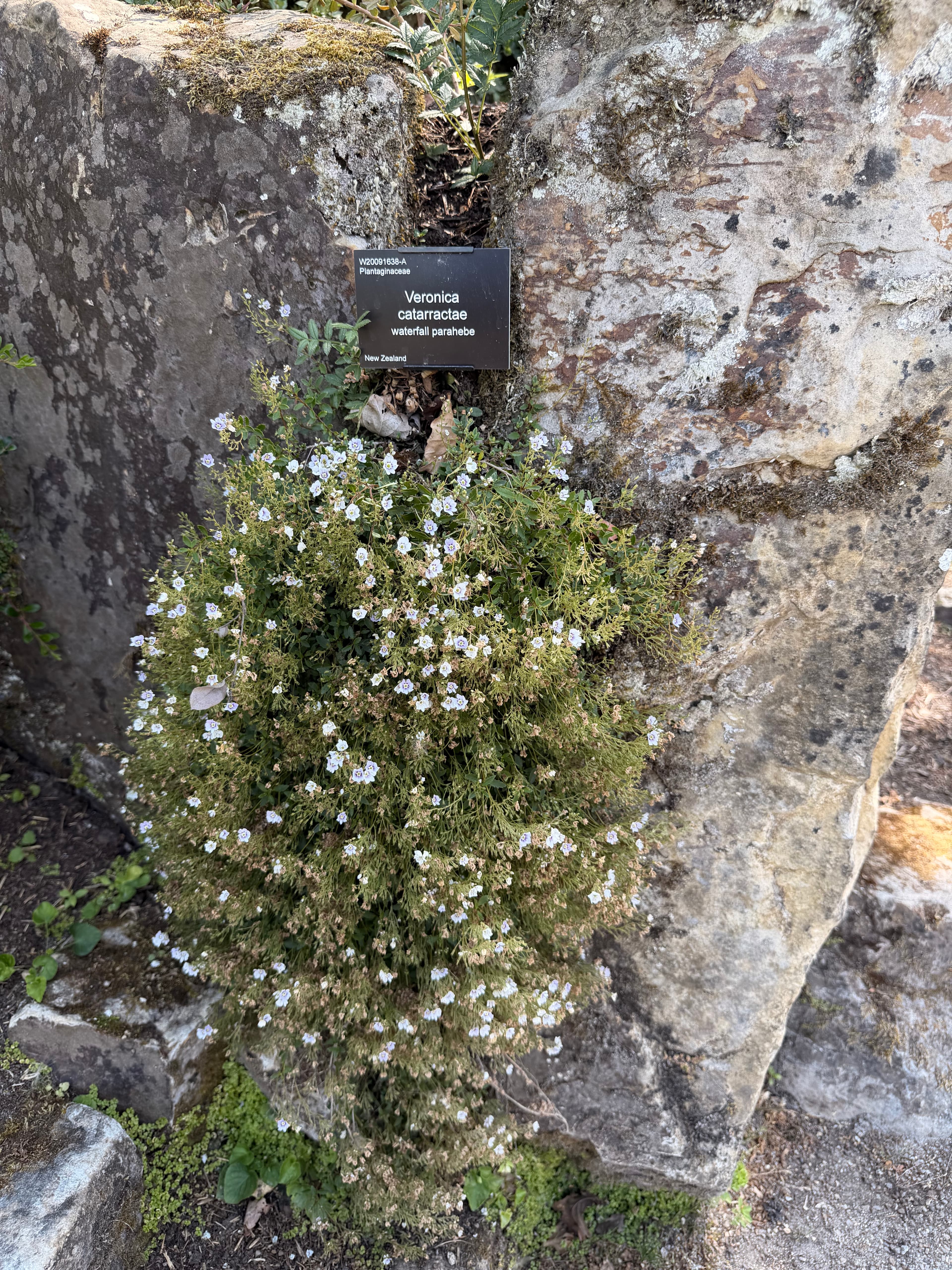
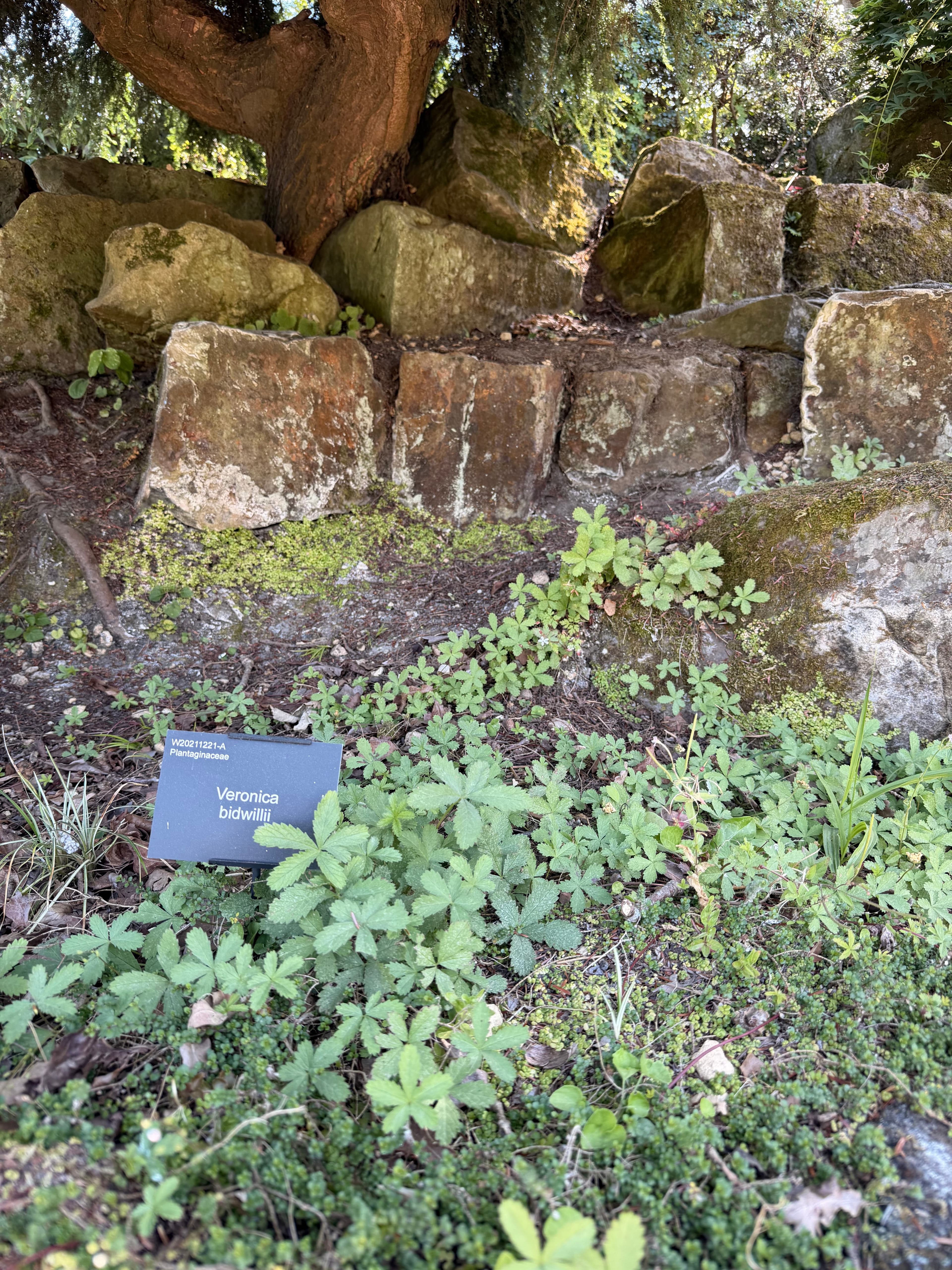
The rock garden is the other thing you come here for: a whole hillside of stone terraces and stepped paths, alpines tucked into every crevice, a weeping conifer trailing over the top of it. I found a Veronica growing straight out of a wall — white flowers foaming from a limestone joint, its little label reading Veronica calamintha. And another lower down, Veronica bidwillii, a mat of tidy toothed leaves at the foot of a rock. I take that as the garden saying hello.
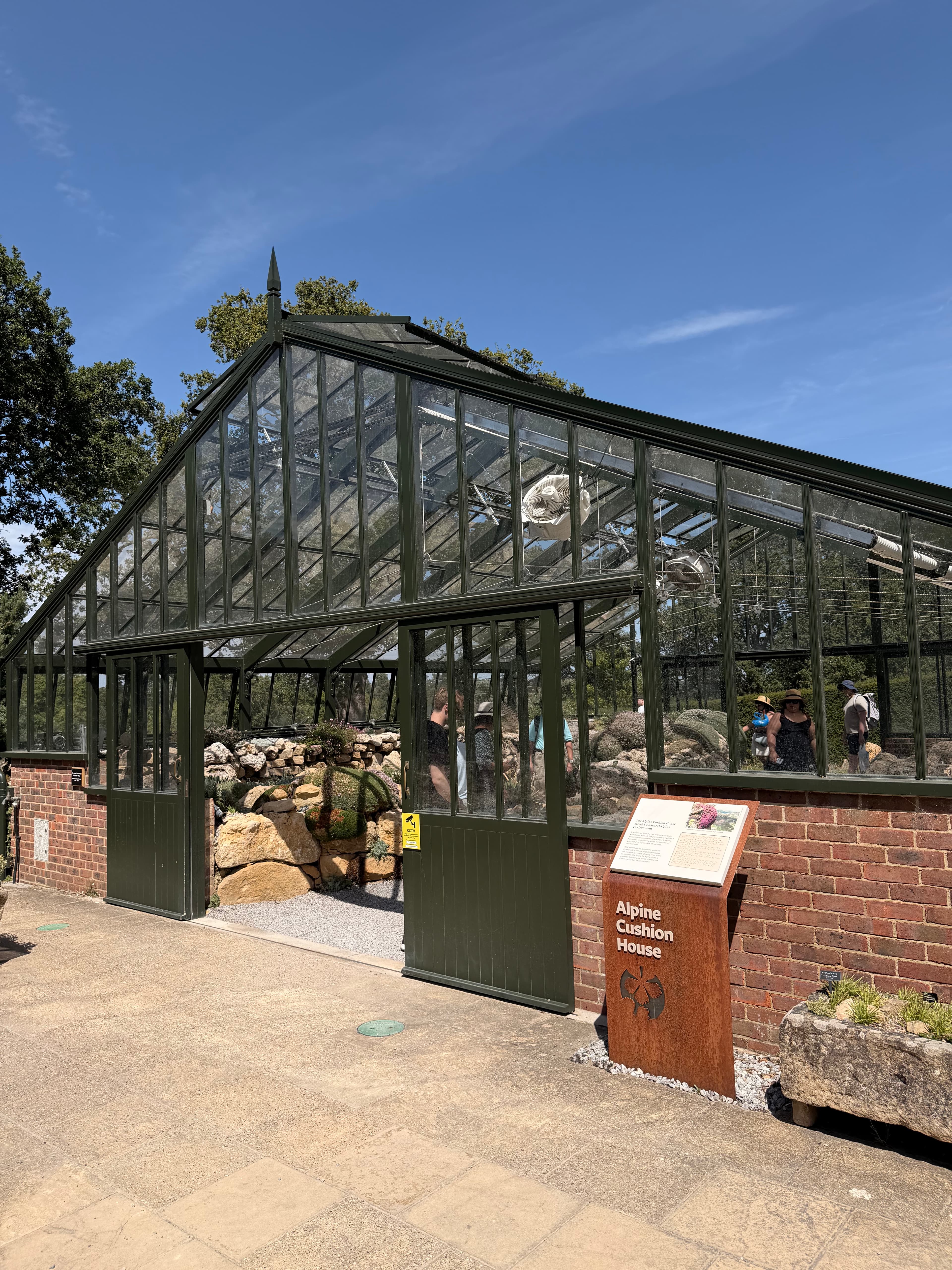
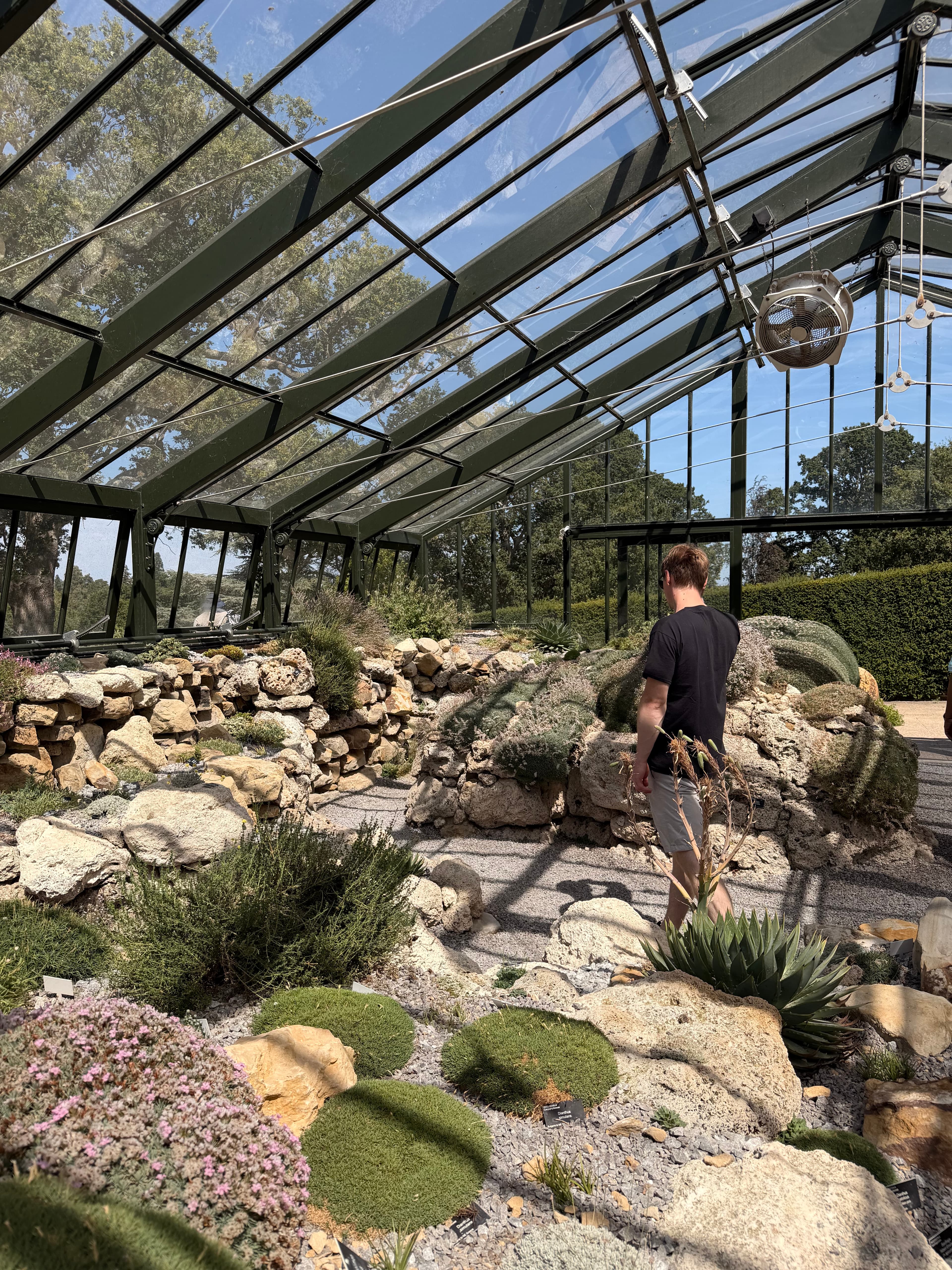
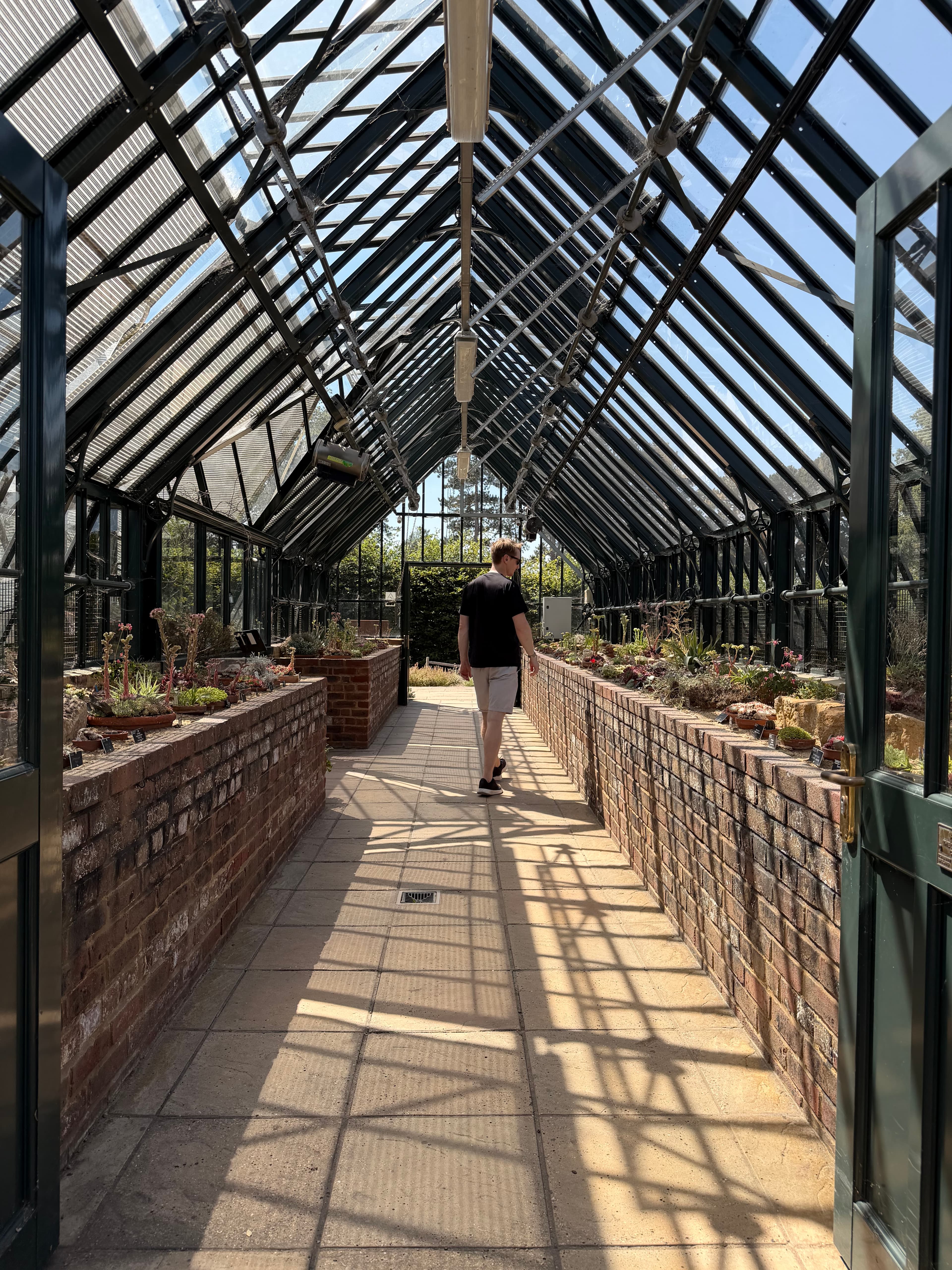
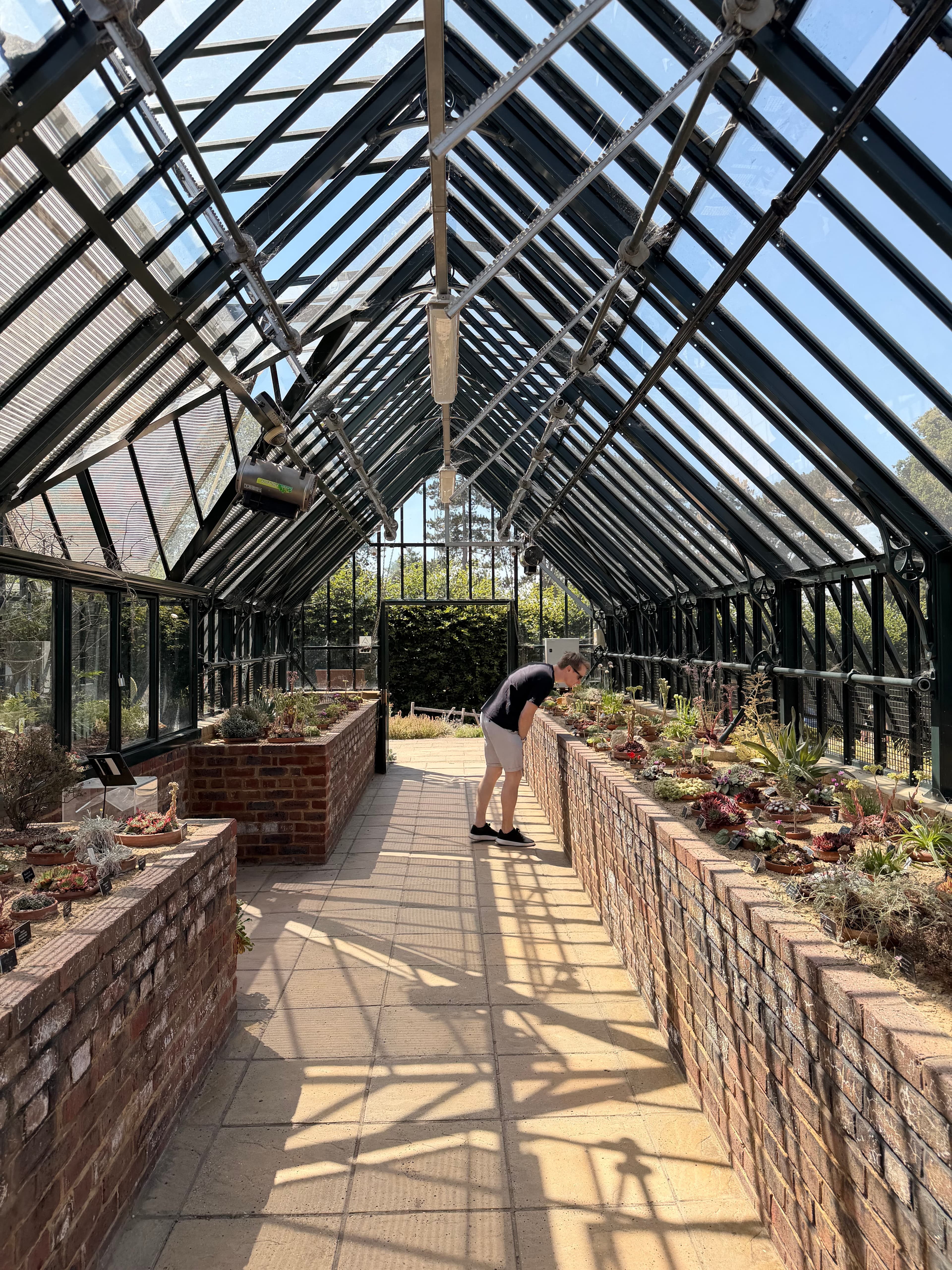
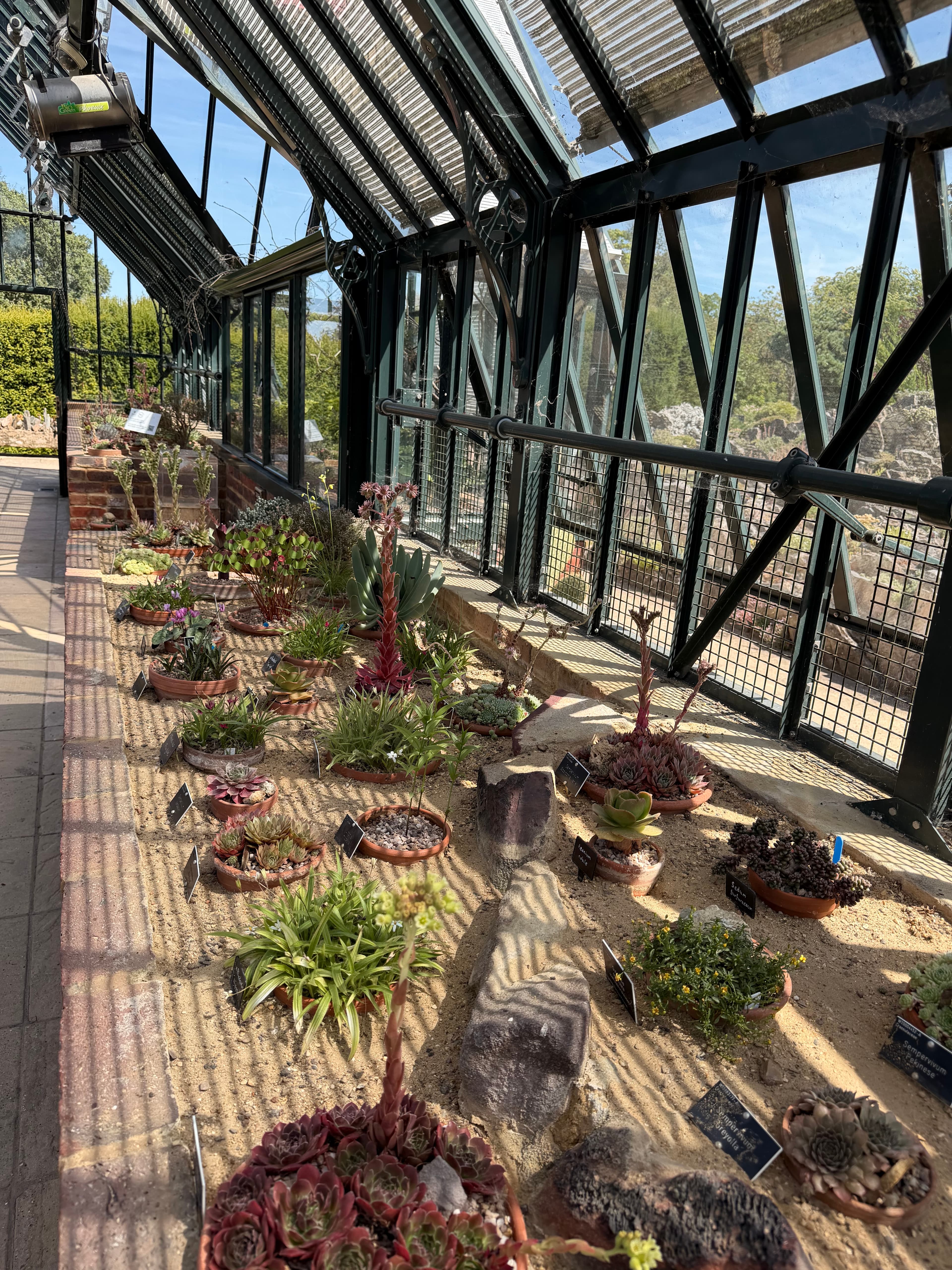
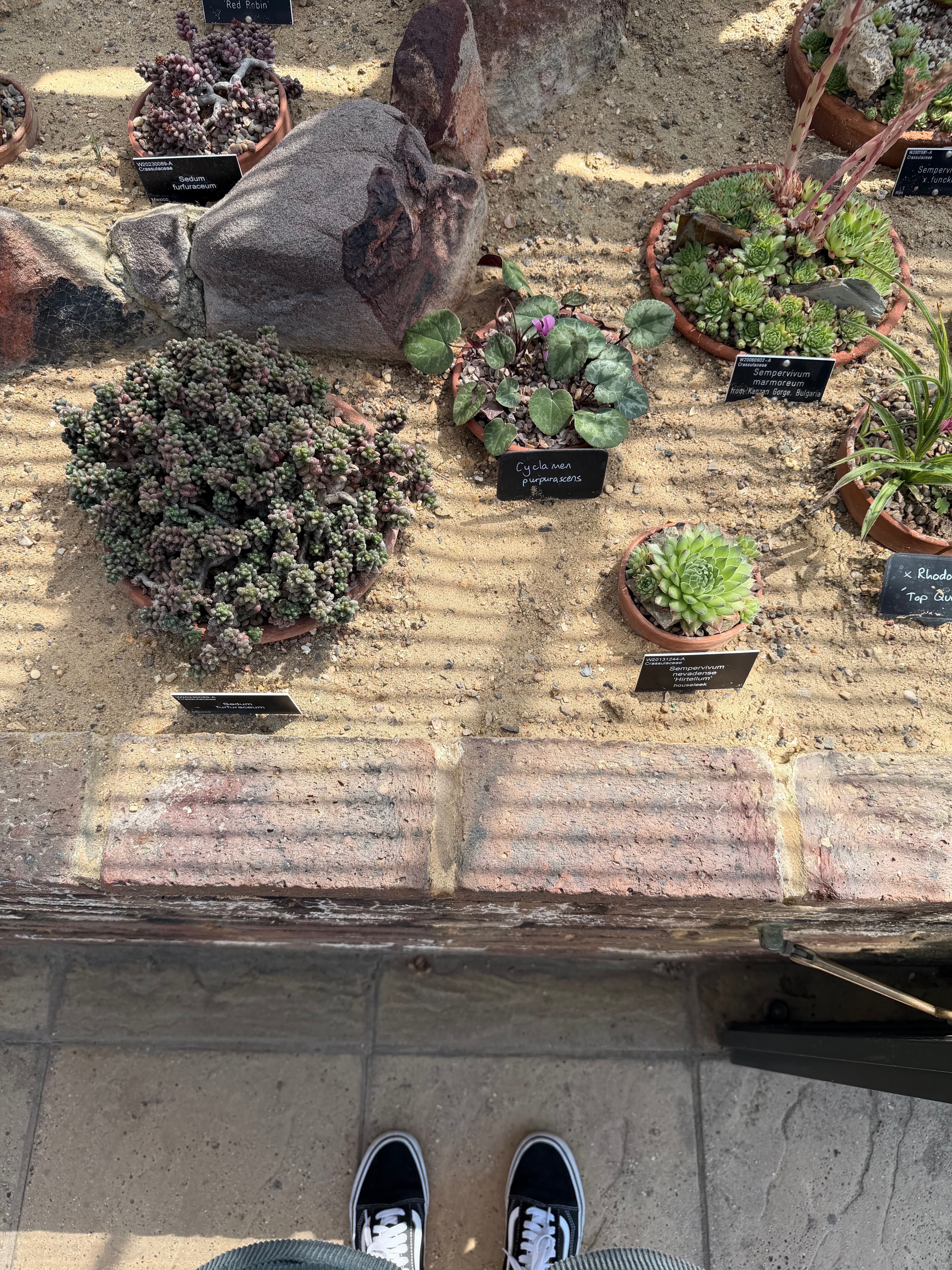
The best surprise was the smallest building. The Alpine Cushion House — a neat green Victorian glasshouse with a brick base, doors thrown open — where alpines are grown the way they actually want to live: in sharp gravel and sand, cushions of them sitting on raised stone beds, moss-green domes and silver rosettes and thrift going pink. Next to it a long alpine display house, brick-walled benches down both sides running the length of the ridge, every pot plunged to its rim in sand and labelled in white on black. Sempervivums, saxifrages, tiny things in terracotta pans, all lined up in the striped light coming through the glazing bars. It's the least showy corner of the whole garden and somehow the one I liked most — plants grown by people who clearly love the difficult ones.
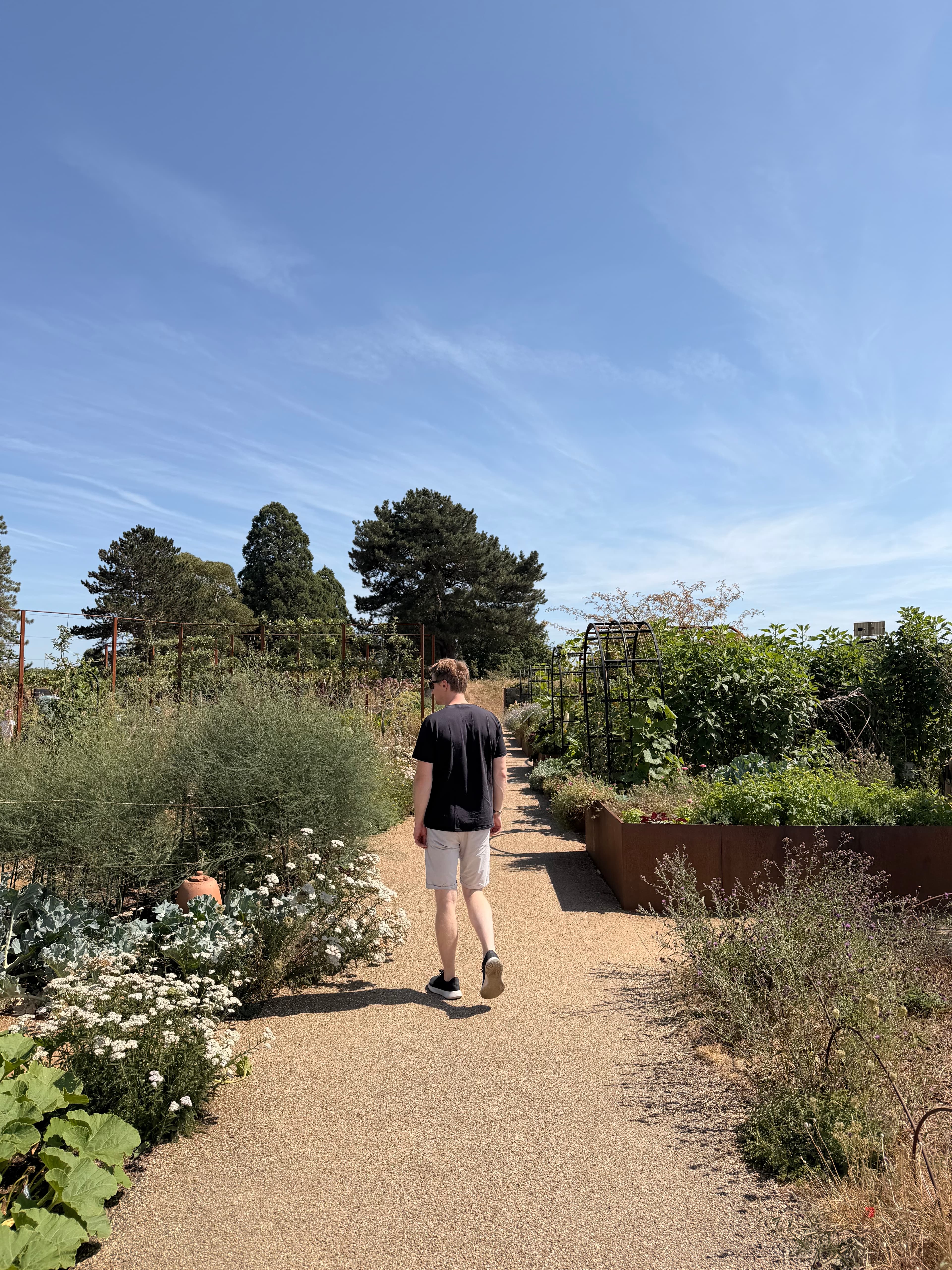
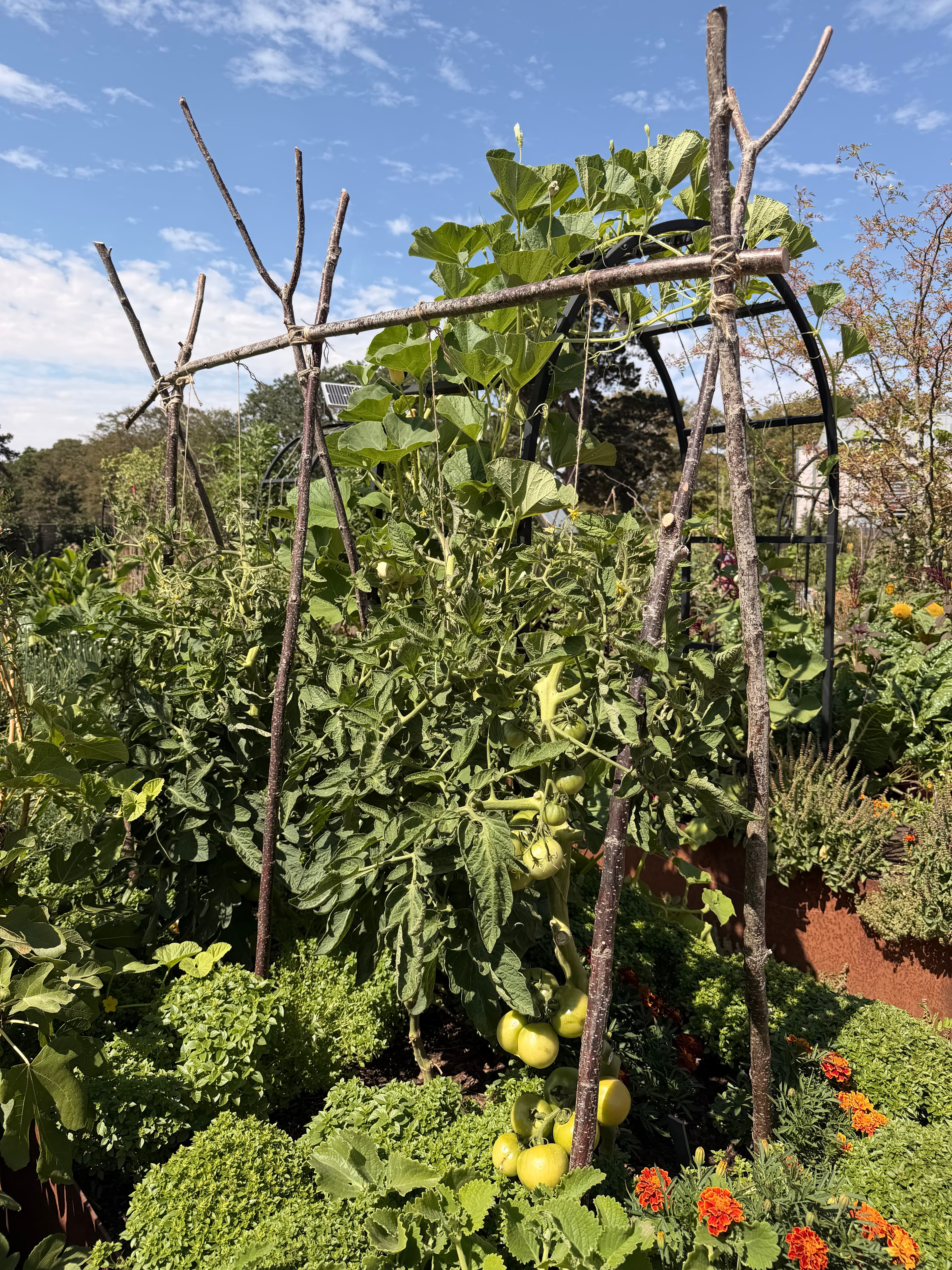
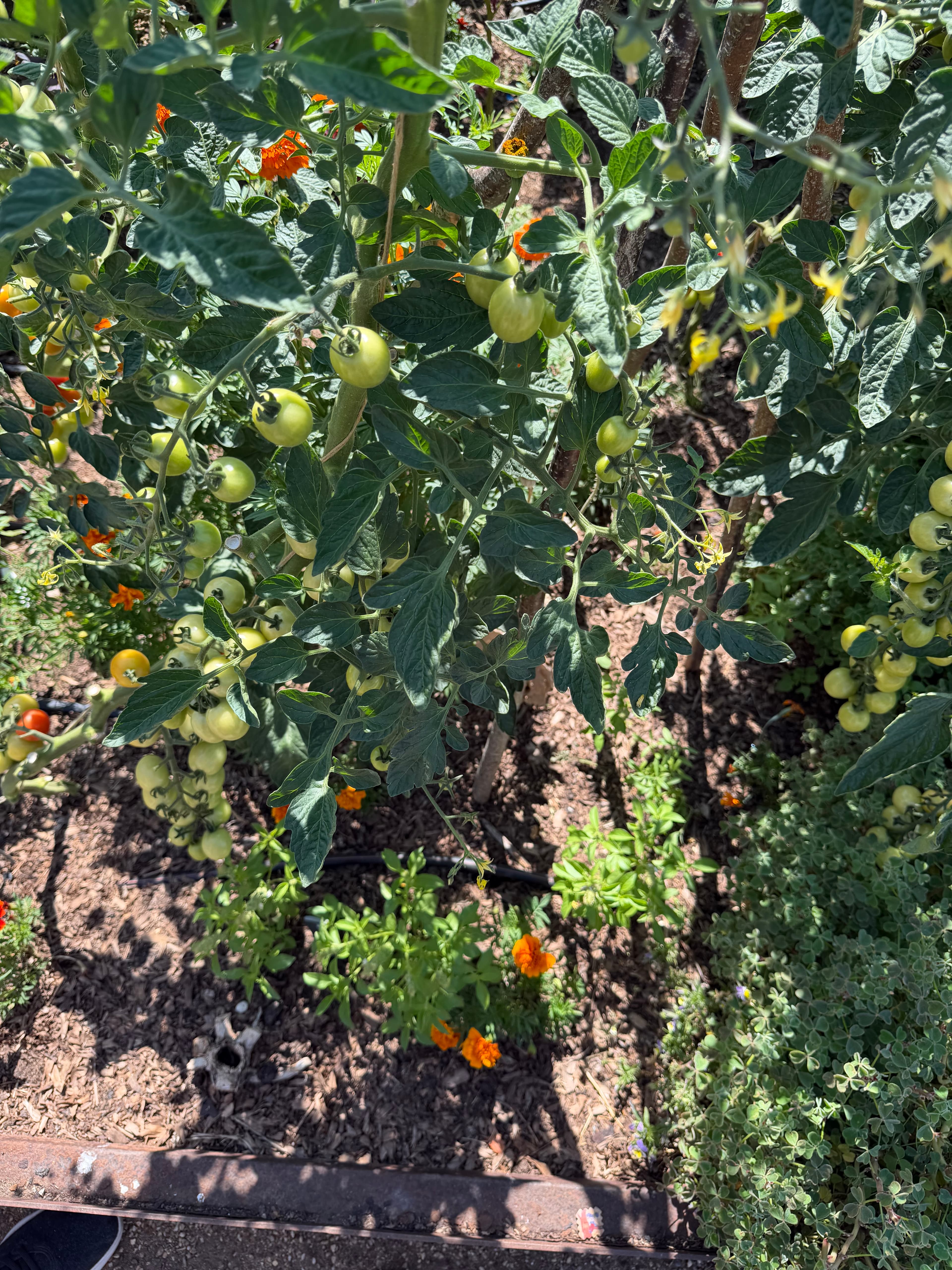
After that, the productive half. A stone avenue lined with clipped topiary in weathered pots leads you down toward the walled garden, and then it all lets go: the kitchen garden in high-summer tumble. Tomatoes climbing hazel wigwams and going red at the trusses, squash sending leaves the size of dinner plates over rusted corten edges, marigolds packed in at the feet of everything to keep the pests honest. It's the opposite of the alpine house — nothing precise, everything generous — and I loved it for that.
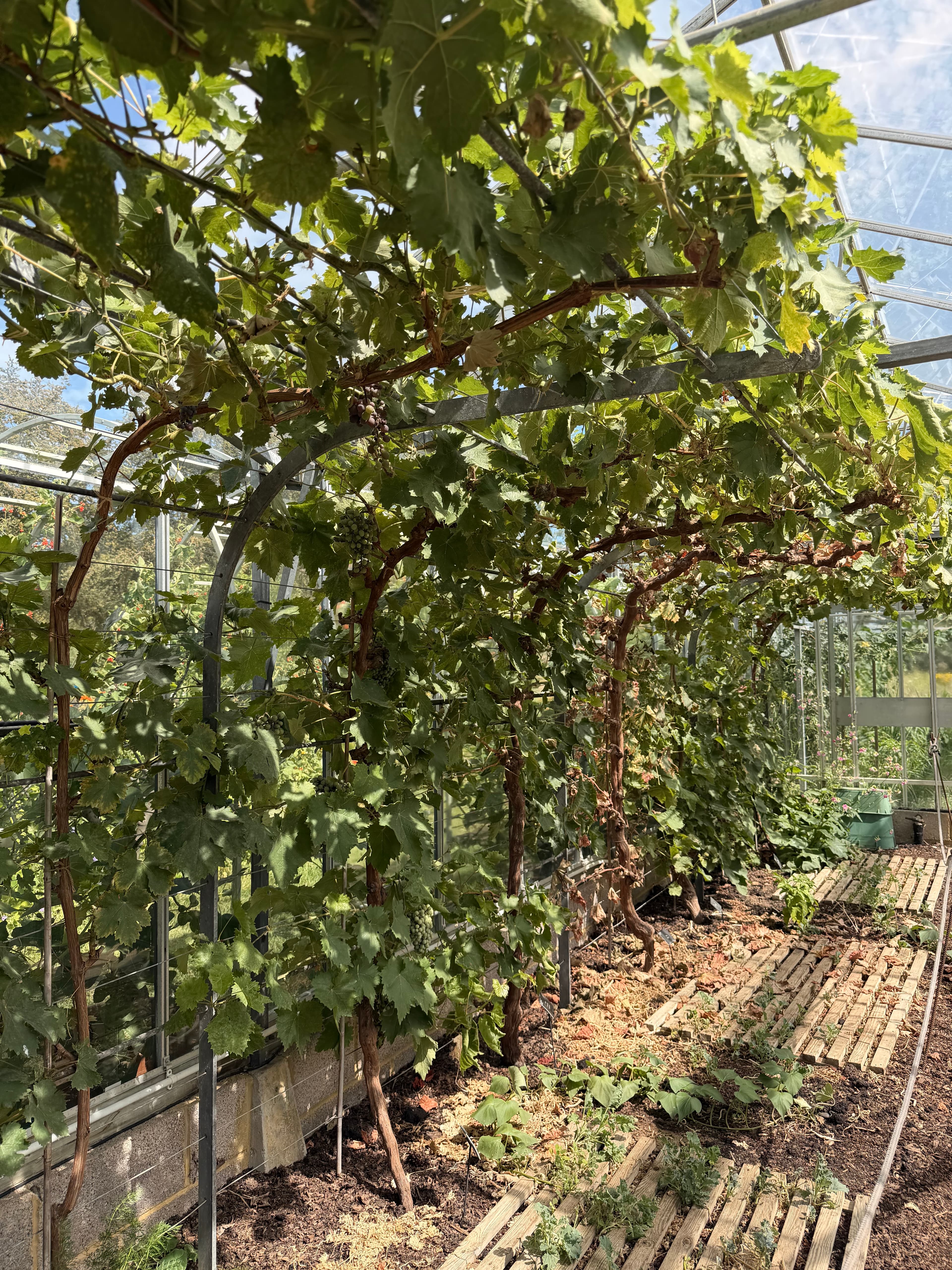
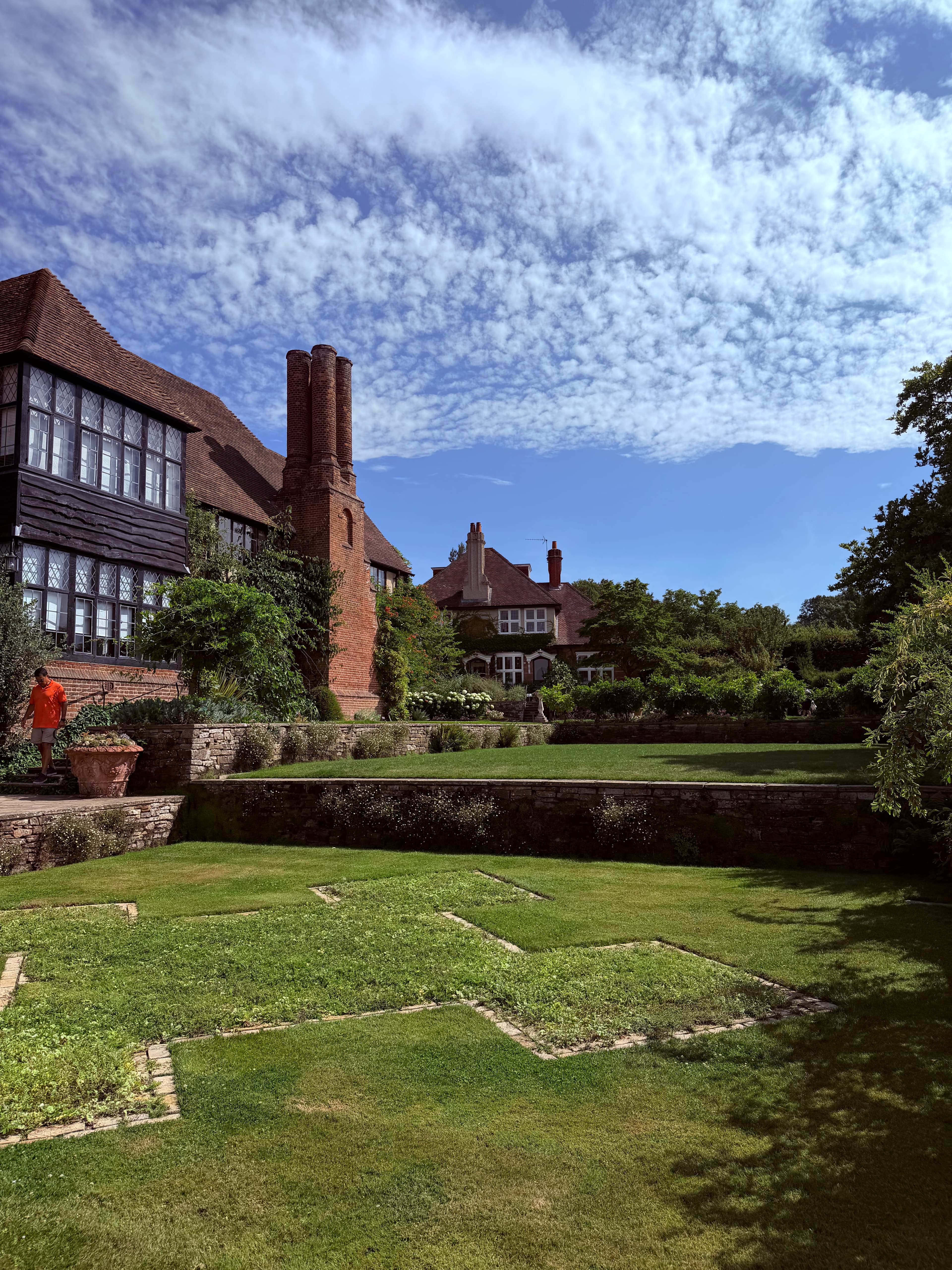
And then the old vinery, a lean glasshouse with grape vines trained flat across the roof, bunches hanging down through the slatted staging in green shade. You could smell the warm leaves. We came out past the house — mellow brick and tall Tudor chimneys, a gravel court lined with potted pelargoniums — and I made the usual quiet resolutions about my own garden that a place like this always provokes.
We left sunburnt and slightly overheated, having walked the whole thing twice, which is the correct way to leave Wisley.






Garden
A visit to Alitex's Hampshire site — showroom glasshouses in a proper garden, a styled lean-to, and the factory where the aluminium frames are made
Garden
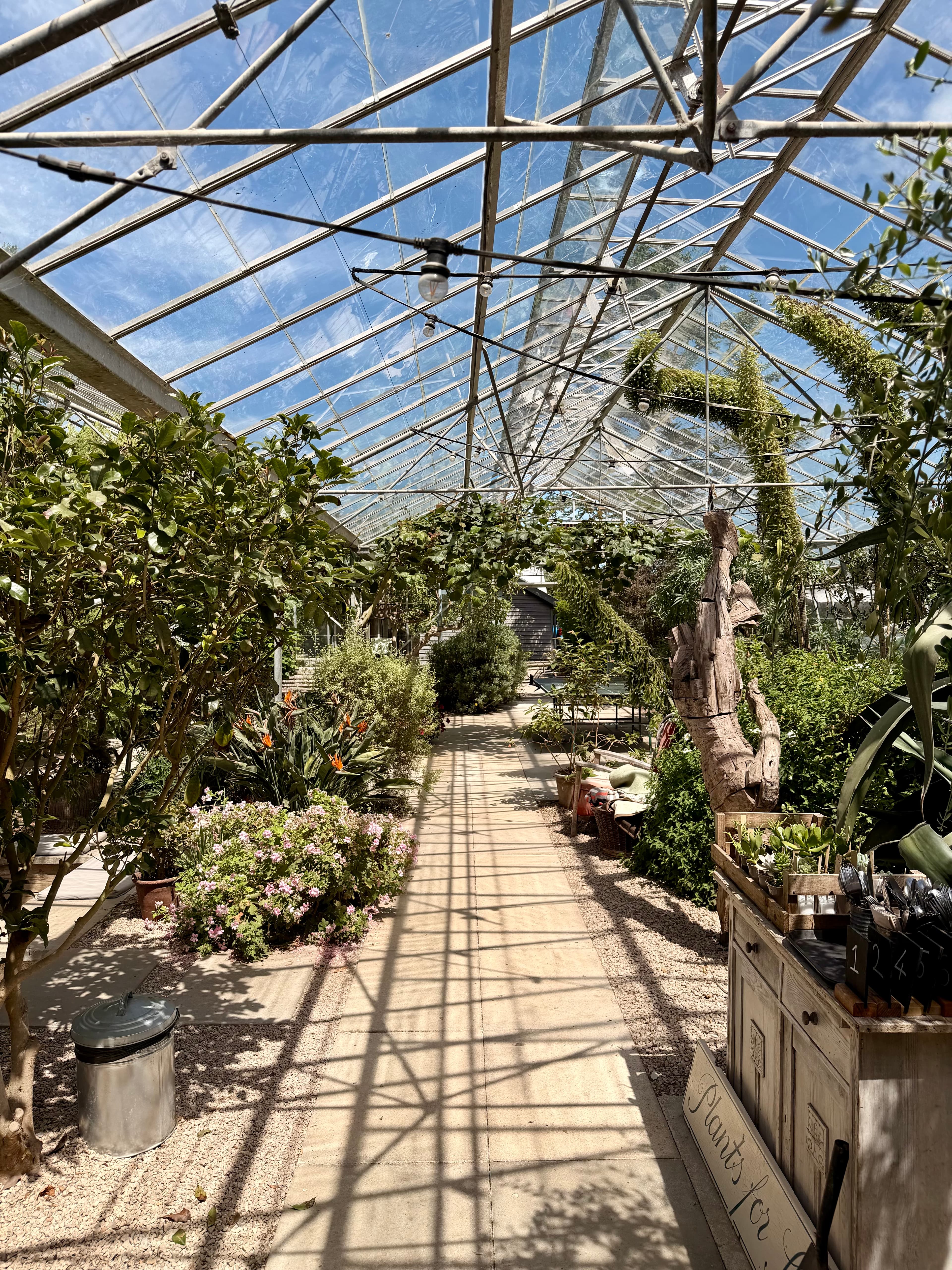
A morning at the wonderfully overgrown Victorian glasshouses near Falmouth — grapevines on the café roof, kiwi and wisteria gone gloriously feral, and the best kind of garden that doesn't tidy itself up for you.
Garden
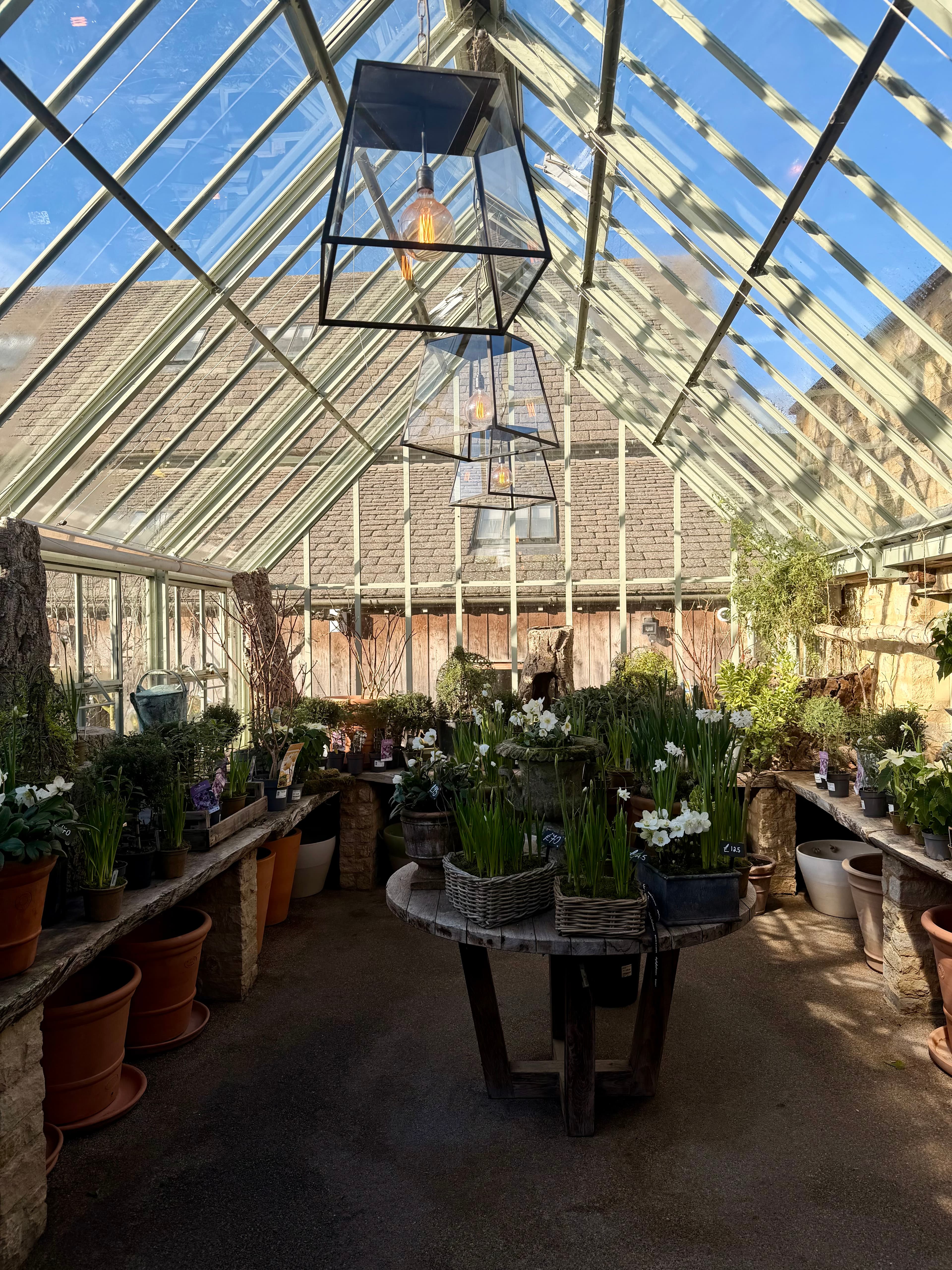
The farm shop in winter — a glasshouse full of narcissus and hanging lanterns, and crates of produce that make you want to cook everything immediately